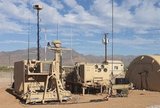
DoD steps up its counter-IED effort
The US Department of Defense (DoD) is continuing its efforts to counter the ongoing improvised explosive device (IED) threat on current operations with the awarding of two IED detection contracts.
The first, awarded to Lattice Government Services on January 25, is for the development of countermeasures to detect and defeat IEDs for the United States Air Force.
According to a statement from Lattice, the company will ‘develop a software/hardware interface to fuse data from heterogeneous sensors and a detection engine’. A mixture of data will be combined for increased situational awareness in the development of IED countermeasures.
Raytheon was awarded the second contract for $51.5 million on January 26 by the US Army to produce a system to defeat IEDs. In a statement, the company said no further details would be made public for the contract.
The IED threat is a constant peril for troops in Iraq and Afghanistan; between October 2001 and January 2011, 65% of casualties in these regions were from IEDs, according to the Defense Manpower Data Center.
‘In addition, the Department of Homeland Security reports that more than 600 IED incidents occur each month outside of these regions, including within the US,’ said Lattice CEO Paul Burgess.
The DoD’s Joint IED Defeat Organization (JIEDDO) says IEDs provide the enemy with ‘inexpensive, stand-off, precision weapon systems that often provide the attacker with near total anonymity’.
Although the use of IEDs has declined in Iraq since 2007, according to JIEDDO, more than 23,000 out of the 35,418 hostile casualties caused during Operation Iraqi Freedom resulted from IED attacks from insurgents.
JIEDDO reports that in Afghanistan the use of IEDs has increased. While they tend to be more rudimentary than those used in Iraq, they are growing in sophistication and frequency as more insurgents share information and realise the potential impact of the weapon.
By Shephard staff