DefExpo 2020: Old artillery pieces never die in India


Indian Defence Minister Rajnath Singh attended a symbolic handover of the first Sharang 155mm towed artillery piece at DefExpo 2020 on 7 February, the Sharang being an upgrade of old Russian M-46 130mm howitzers.
In fact, the first batch of guns was delivered by the Ordnance Factory Board (OFB) to the Indian Army earlier in February. By the end of March, a total of 18 Sharangs are to be delivered.
These are the first units in a four-year contract to upgrade 300 artillery pieces.
The last round of live-fire testing occurred at the Long Proof Range of the OFB on
Our news & analysis is now part of Defence Insight®
A Basic-level or higher Defence Insight subscription is now required to view this content.



More from Land Warfare
-
![Boxer lands another order as contracts and opportunities build momentum]()
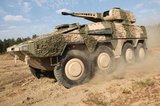
Boxer lands another order as contracts and opportunities build momentum
As Germany prepares its €25 billion order under the Arminius framework – the biggest Boxer procurement to date – the platform could become an increasingly powerful contender in European competitions.
-
![Trans-European iMUGS2 uncrewed systems programme set for three-day exercise in 2028]()
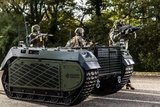
Trans-European iMUGS2 uncrewed systems programme set for three-day exercise in 2028
The next stage of the Integrated Modular Unmanned Ground System (iMUGS) programme, dubbed iMUGS2, was launched in November 2025. Three major demonstrations are planned before the end of 2028.
-
![British Army Land Rover replacement plan inches forward]()
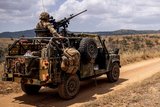
British Army Land Rover replacement plan inches forward
The UK Ministry of Defence has proposed a selection date of May 2027 for the Land Rover replacement requirement, with deliveries expected through to 2036. Next month’s DVD exhibition will be a key shop window for bidders.
-
![Snow patrol and access all areas: the Arctic all-terrain vehicles market grows]()
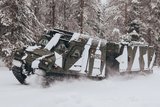
Snow patrol and access all areas: the Arctic all-terrain vehicles market grows
The procurement and planned procurement of articulated tracked all-terrain vehicles is being driven by a need to replace older platforms and an acknowledgement of a capability gap for Arctic regions.