


Companies downselected for British Army vehicle programme
It is believed that three companies did not make the downselect but a dark horse in Spain’s Iturri is believed to have got through.


Cubic Defense Applications will supply an advanced Instrumented-Tactical Engagement Simulation System (I-TESS) II to the US Marine Corps (USMC) under an additional delivery order announced on 21 June. The order will replace older generation systems at the USMC base in Quantico.
The training solution is designed to provide an immersive training capacity that replicates the stresses and threats of actual combat.
The I-TESS II system consists of a small-arms transmitter, which can be used with automatic weapons, machine guns, rocket-propelled grenades and AT4 rocket launchers. There also is a man-worn detection system, audio and visual effects to simulate hand grenades, and tracking and engagement gear for vehicles and fixed structures.
The system’s GPS and radio system provides real-time tracking of individuals and vehicles, in both indoor and outdoor conditions. The data is collected and briefed to the marine as an objective based after-action review.
Dave Schmitz, president of Cubic Defense Applications, said: ‘Cubic is committed to providing the highest quality and most effective training experience possible. We are very pleased to provide the USMC with an immersive, safe environment to prepare our military’s men and women for combat.
‘Our system expands on existing training technology by offering a new battlefield effects simulation interface module to replicate the effects of improvised explosive devices. Our technology also includes lighter weight wireless detection systems for laser weapons fire against marines, vehicles and structures, which tells marines that they have been hit and the extent of the damage.’


It is believed that three companies did not make the downselect but a dark horse in Spain’s Iturri is believed to have got through.
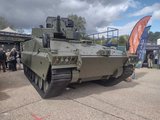
Air defence and counter-drone weapons continue to be developed, tested and demonstrated in anticipation of growing demand, with most solutions designed to be platform-agnostic and readily integrated onto suitable platforms.
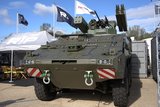
The US Army began its search for a 155mm tracked mobile tactical cannon in an effort that Shephard forecasts could be worth billions of dollars. Meanwhile, the UK DVD exhibition saw companies showcase their offerings for the British Army’s mobility and air defence requirements.
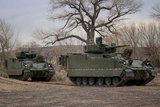
The development demonstrates how the platform could provide additional firepower and growth potential while the US Army progresses its long-term replacement for the Bradley.
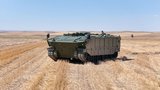
FNSS and PT Pindad are progressing the Indonesian tracked armoured personnel carrier programme as local production gets under way.
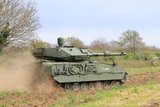
Firing trials of the Tulpar and Leonardo Hitfact Mk II combination follow an integration programme covering mechanical, electrical, electronic and software interfaces.

Connect with us on socials


