


Canada accelerates uncrewed aerial system procurement for NATO and Arctic forces
Canada plans to acquire at least 120 uncrewed aerial systems through two competitions with combined funding ceilings of C$32 million.


Chemring Technology Solutions launched its new GroundHunter Multi-head Detection System (MHDS) hand-held IED detector on 20 April.
GroundHunter is a hand-held IED detector with interchangeable sensor heads for wire and metal detection. The system supports multiple sensor heads to enable quick changes to respond to changing scenarios. It has a common user interface and a compact folding design, so that multiple sensor heads can be carried by a single operator.
The GroundHunter MHDS is currently available with two sensor heads: CWD100 and MD100. The CWD100 command wire detector head identifies command wires that are over 20m in length, independent of their orientation. It incorporates its own transmitter and receiver. The MD100 head uses pulsed induction techniques to detect ferrous and non-ferrous metals.
Ian Redwood, product manager, Chemring Technology Solutions, said: ‘Our pedigree of developing exceptional sensors and systems has enabled us to create GroundHunter MHDS, which delivers multiple functions to help military teams react faster and more flexibly to the threats they find themselves facing. GroundHunter MHDS provides a weight and power saving compared to carrying two detectors, as well as being easy to pack and carry.’


Canada plans to acquire at least 120 uncrewed aerial systems through two competitions with combined funding ceilings of C$32 million.
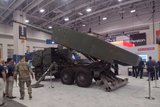
New counter-drone technologies, autonomous launchers and manufacturing modernisation initiatives highlighted emerging opportunities for defence suppliers, while the UK advanced a major military vehicle procurement programme.

Non-US companies are increasingly looking to establish subsidiary and partnerships to access the potential billions of dollars of vehicle and land systems contracts and there has already been some success.

Pearson Engineering has provided equipment and engineering expertise to the Armed Forces of Ukraine since the beginning of the full-scale Russian invasion in 2022. The British company is now working to deepen engagement with the Ukrainian defence industry, expanding its support for the country’s population and laying the foundations for future technological innovation.
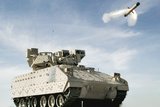
Rather than developing entirely new weapons, defence companies are looking to build on existing weapons and systems to deliver greater capability, control costs and accelerate fielding.

With a production rate of more than 10 million vehicles annually, the US commercial car and vehicle manufacturing base is second only to China. Defence companies are looking at how the vehicles, technology and manufacturing capability can support programmes.

Connect with us on socials


