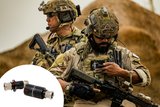
BAE Systems receives $56m thermal weapon sights order
BAE Systems will provide thermal weapon sights to the US Army under a $56 million contract that continues production of the widely-used sights that improve situational awareness and survivability for men and women in combat.
The second-generation thermal sights give soldiers a tremendous day/night advantage to detect, observe and engage the enemy on today's battlefield by providing imagery independent of darkness, smoke and other common battlefield obscurants. Under the contract, BAE Systems will provide light, medium and heavy variants for use on individual and crew served weapons.
"BAE Systems is the world's number one provider of thermal sights, giving men and women serving in harm's way the ability to see through obscured visibility conditions, day or night," said Barry Yeadon, director of thermal weapon sight programs for BAE Systems in Lexington, Massachusetts.
The company now provides thermal weapon sights to the US and several other countries. This order is the most recent under a five-year indefinite-delivery/indefinite-quantity contract administered by the Army's Research and Development Command Acquisition Center. A previous award increased BAE Systems' total thermal weapon sight contract value to more than $1 billion since 2004.
To date, BAE Systems has delivered more than 94,000 sights to meet Army fielding requirements to support operations in Iraq and Afghanistan.
Source: BAE Systems




More from Land Warfare
-
![British Army’s Project Stokes 120mm mortar bids due in March 2026]()
British Army’s Project Stokes 120mm mortar bids due in March 2026
Project Stokes could see a new 120mm mortar capability enter British service, with domestic production and international partnerships central to competing bids.
-
![World Defense Show 2026: Large vehicles and counter-drone systems take the limelight]()
World Defense Show 2026: Large vehicles and counter-drone systems take the limelight
Visitors who attended the first World Defense Show four years ago continue to speak of the difficulties they faced with poor facilities and power problems. This year’s event emphasised its status as one of the major defence expositions and as a place where regional players and those less welcome at other shows could take centre stage.
-
![MKJ Warrior Series — The Nett Warrior Qualified Connector for Today’s Soldier Systems]()
MKJ Warrior Series — The Nett Warrior Qualified Connector for Today’s Soldier Systems
ITT Cannon’s MKJ Warrior connectors are designed for the harshest environments, delivering mission critical comms, navigation and USB data/power.