BAE Systems awarded M109A7 extended range work


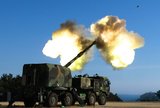
BAE Systems is to carry out work to increase the range and rate of fire on current and future M109A7 self-propelled howitzers under a contract from the US Army announced on 15 July.
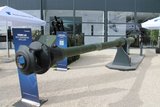
Under the $45 million Extended Range Cannon Artillery (ERCA) Increment 1 prototype contract, the army is looking to address capability gaps in its indirect fire systems and improve the rate and range of fire with the development of power distribution software and hardware integration solutions. ERCA will be integrated onto the M109A7 and will require the M109A7’s current 39-caliber turret to be replaced with a 58-caliber, 30ft long gun barrel with the objective of creating firepower double the current range.
While increasing range, the goal is to maintain the weight found in current systems to minimise performance impacts on the chassis.
Scott Davis, vice president or programs, BAE Systems’ Combat Vehicles business, said: ‘ERCA is a significant technological step forward for the army’s artillery portfolio.
‘We were selected based on our years of experience in the development of self-propelled howitzer systems. Long-range precision fire is a top priority for the army, and we are pleased to be a partner in efforts to equip soldiers with the latest technology.’
Related Equipment in Defence Insight

More from Land Warfare
-
![US pours another $23 billion into Arsenal of Freedom to ramp up missile production]()
US pours another $23 billion into Arsenal of Freedom to ramp up missile production
The US Department of Defense (DoD) is spending billions of dollars to accelerate missile production to meet demands from the war against Iran and requirements in Ukraine. Manufacture of SM-3 and PAC-3 interceptors is being ramped up, alongside a $22.9 billion commitment to Tomahawk cruise missiles.
-
![Trans-European iMUGS2 uncrewed systems programme set for three-day exercise in 2028]()
Trans-European iMUGS2 uncrewed systems programme set for three-day exercise in 2028
The next stage of the Integrated Modular Unmanned Ground System (iMUGS) programme, dubbed iMUGS2, was launched in November 2025. Three major demonstrations are planned before the end of 2028.
-
![British Army Land Rover replacement plan inches forward]()
British Army Land Rover replacement plan inches forward
The UK Ministry of Defence has proposed a selection date of May 2027 for the Land Rover replacement requirement, with deliveries expected through to 2036. Next month’s DVD exhibition will be a key shop window for bidders.