AUSA 10: Lockheed Martin offers up 40mm ‘tag and track’ capability
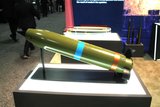
Lockheed Martin has developed a covert tagging and tracking system, initiated by 40mm grenade, designed to covertly ‘paint’ high value targets and suspected enemy combatants with a laser-detectable tracking agent, Land Warfare International has learnt.
In response to a Broad Agency Announcement from the US Special Operations Command (USSOCOM) for such a capability, Lockheed Martin told LWI that it was on track to conduct a series of test firings in Florida next week.
Dubbed ‘SkyFire’, Lockheed Martin’s solution launches a covert agent from an exploding 40mm grenade which marks up personnel in an undisclosed radius with ‘colourless, odourless and tasteless’
Our news & analysis is now part of Defence Insight®
A Basic-level or higher Defence Insight subscription is now required to view this content.




More from Land Warfare
-
![With changing patterns in Middle Eastern procurement, is Europe missing out?]()
With changing patterns in Middle Eastern procurement, is Europe missing out?
Traditional suppliers are struggling to meet the Middle East’s armoured vehicle modernisation needs, creating opportunities for South Korean manufacturers and regional defence industries.
-
![AUSA 2026: CUAS market expands as suppliers target new threats and operational requirements]()
AUSA 2026: CUAS market expands as suppliers target new threats and operational requirements
New developments from MARSS, MyDefence, Mountain Horse Solutions and Rafael suggest that future counter-drone protection will increasingly depend on combining advanced detection, rapid interception and integrated defensive networks.
-
![Integrated approach: transforming vehicle communications for a new era of warfare]()
Integrated approach: transforming vehicle communications for a new era of warfare
In the modern battlespace, military intercom systems can no longer operate in isolation. They must instead be integrated with the wider tactical network, gaining operational advantages through secure communications with dismounted soliders and other assets across domains.