


FNSS advances Indonesian Kaplan APC programme as local production expands
FNSS and PT Pindad are progressing the Indonesian tracked armoured personnel carrier programme as local production gets under way.


Alion Science and Technology will work with the US Department of Defence (DoD) in an engineering and science and technology expertise capacity to develop next-generation counter-improvised explosive device (C-IED) capabilities. The company announced a $17.7 million task order for the work on 8 April.
The US DoD currently develops a number of systems to counter the IED threat to warfighters in theatres around the world.
Systems development focuses on applications that detect and neutralise mines, mine fields and unexploded ordnance; while technology development focuses on personnel protection, handheld detectors, wide area detection, mechanical clearance, vegetation clearance and mine awareness.
This contract will see Alion support the conception, prototyping, improving and experimenting with technologies, devices and systems, to find the next-generation solutions. This will include efforts to improve warfighters’ situational awareness, to enable soldiers to better identify, defeat and bypass explosive threats.
Terri Spoonhour, senior vice president and distributed simulation group manager, Alion, said: ‘The services we will provide under the task order will enable the DoD to detect and neutralise explosive hazards wherever our forces are deployed. This will ultimately save lives and ensure our units accomplish their critical missions.’

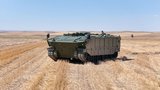
FNSS and PT Pindad are progressing the Indonesian tracked armoured personnel carrier programme as local production gets under way.
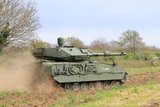
Firing trials of the Tulpar and Leonardo Hitfact Mk II combination follow an integration programme covering mechanical, electrical, electronic and software interfaces.
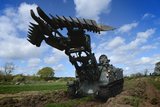
The news from Ukraine has again shown that antitank minefields and other obstacles on the battlefield, such as deep trenches, can play a key role in both offensive and defensive operations. Given this, there will always be a need to clear them, both during and after a conflict.
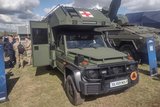
The UK Ministry of Defence has avoided being prescriptive in its search to replace the British Army’s Land Rover, meaning vehicle types being offered range from Land Rover Defender Wolf II and Humvee to the hybrid series Fering Pioneer. What does this mean for the procurement process?

The introduction of Ajax vehicles into British Army service was stopped after operator health issues were reported during an exercise, but manufacturer General Dynamics Land Systems UK believes work over the past 10 months has dealt with the problems.

Sweden, Croatia and France are pursuing different rocket artillery solutions as European armies seek greater reach, survivability and industrial resilience.

Connect with us on socials


