USCG receives Benjamin Bottoms
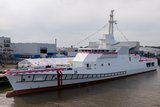
The US Coast Guard (USCG) received its 32nd Fast Response Cutter (FRC), Benjamin Bottoms, in Key West, Florida, on 8 January.
Benjamin Bottoms will be the fourth FRC stationed in San Pedro, California, and is scheduled to be commissioned in May.
The 154ft Sentinel-class FRCs feature advanced C4ISR equipment to perform a wide range of missions including SAR; national defence; ports, waterways and coastal security; drug and migrant interdiction; and fisheries patrols.
The cutters have improved habitability and seakeeping and over-the-horizon cutter boat launch and recovery capabilities. The vessels can reach a maximum speed of 28kt and have an endurance of at least five days.
To date, the USCG has ordered 50 FRCs of which 29 are in service: 12 in Florida, six in Puerto Rico, one in California and two each in Alaska, New Jersey, Mississippi, Hawaii and North Carolina.
Related Equipment in Defence Insight



More from Naval Warfare
-
![Five years on: where could opportunities emerge next for AUKUS Pillar II?]()
Five years on: where could opportunities emerge next for AUKUS Pillar II?
Payload commonality, combat systems and electronic warfare are emerging as likely priorities as the trilateral partnership balances building submarines with sharing industrial ecosystems.
-
![From the Baltic to the Gulf: where USV procurement is heading next]()
From the Baltic to the Gulf: where USV procurement is heading next
Saildrone’s new Copenhagen base is one sign of a larger shift, as navies globally turn to uncrewed vessels for surveillance and mine clearance.
-
![Quantum sensing gathers pace as navies eye undersea advantage]()
Quantum sensing gathers pace as navies eye undersea advantage
As AI dominates defence conversations, industry increasingly points to quantum sensing as the technology set to change submarine and uncrewed underwater vehicle operations.