US mulls Aegis sale to Japan
The US state department has approved a potential foreign military sale to Japan for the DDG 7 and 8 AEGIS Combat System, Underwater Weapon System (UWS), and Cooperative Engagement Capability (CEC) for an estimated cost of $1.5 billion. The Defense Security Cooperation Agency announced the possible sale on 7 August.
The Japanese government has requested two ship sets of the MK 7 AEGIS Weapon System, AN/SQQ-89A (v) 15J UWS and CEC. Additional items include associated equipment, training and support. If approved, deliveries will take place over the next six to seven years.
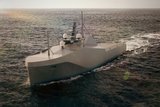
The ACS/UWS/CEC have been requested to support ship construction for a new ship class of DDGs based upon a modified, as-of-yet unnamed Atago-class hull and a new propulsion system.
In addition to installation support material and special purpose test equipment, systems engineering, technical services, on-site vendor assistance, spare parts, systems training and staging services necessary to support ship construction and delivery are under consideration. Post-construction Combat System Qualification Testing is expected to be procured under a future Foreign Military Sale.
The equipment has been requested by Japan as part of its work to modernise its fleet to support Integrated Air and Missile Defense roles and special mission requirements. The addition of two new AEGIS DDGs will fulfill Japan’s goal of acquiring eight ballistic missile defense capable ships and will further enhance interoperability with the US Navy.



You may also like

More from Naval Warfare
-
![Schiebel sees progress in South Korea and Greece despite cautious shipbuilders]()
Schiebel sees progress in South Korea and Greece despite cautious shipbuilders
The Camcopter S-300 remains on track for South Korea and was in the hunt in France, but shipbuilders remain guarded, a cooler mood than at Eurosatory.
-
![US Navy explores 3D-printed parts for Growler, Poseidon and Arleigh Burke destroyers]()
US Navy explores 3D-printed parts for Growler, Poseidon and Arleigh Burke destroyers
USN procurement notices point to potential uses for additive manufacturing in naval aviation and shipbuilding.
-
![Who commands the uncrewed systems when the mothership goes down?]()
Who commands the uncrewed systems when the mothership goes down?
In October 2026, the US Navy sent an uncrewed surface vessel to sea with a carrier strike group for the first time. It is a step forward for hybrid operations, but it raises an awkward question: what happens to the drones if the ship controlling them is lost?
-
![Greece’s $8.1 billion naval pipeline signals opportunities beyond frigates]()
Greece’s $8.1 billion naval pipeline signals opportunities beyond frigates
Defence Insight has identified 14 upcoming Greek naval programmes, with submarine replacement, uncrewed systems and longer-term fleet renewal offering potential opportunities for suppliers.
-
![Navantia pitches 64-cell F110 frigate and sets out plans for 75m autonomous vessel]()
Navantia pitches 64-cell F110 frigate and sets out plans for 75m autonomous vessel
With its second F110 frigate launched four months early, the Spanish shipbuilder is courting allied navies with a missile-defence upgrade and a 75m uncrewed vessel.