Canada’s HCM project powers ahead


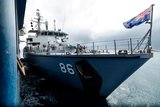
The Royal Canadian Navy’s Halifax Class Modernization (HCM) project has reached an important new milestone, with First Article Acceptance now achieved, Lockheed Martin Canada announced on 22 December.
First Article Acceptance confirms that Lockheed Martin Canada’s combat system design meets the navy’s performance requirements. Extensive integration testing and sea trials have already been conducted, and individual system acceptance has been achieved for seven of the 12 Halifax class frigates undergoing the programme.
Lockheed Martin Canada has worked closely with the Royal Canadian Navy on the HCM project throughout the requirement, sub-system selection, design and implementation phases. As vessels continue to come out of the modernisation process, they go through various stages of readiness as the new systems are tested and the crews are trained. Modernised ships have already returned to the fleet.
Vice-Admiral Mark Norman, Commander of the Royal Canadian Navy, said: ‘The overall management and success of the programme has proven to be an excellent partnership model for future shipbuilding projects, and has been recognised internationally. The valuable information provided to the New Zealand Ministry of Defence on our modernisation experience assisted them in their decision to upgrade the combat systems on their ANZAC class ships.
‘This global export opportunity of the Canadian combat system is the result of close collaboration between the Royal Canadian Navy, Department of National Defence, and industry.’
Rosemary Chapdelaine, vice president, Lockheed Martin Canada Mission Systems and Training, added: ‘Our innovative combat management system, integration methodology, and Canadian supply chain form the largest component of the modernisation project. Our team is thrilled to deliver Canadian-built, world-class technology to the Royal Canadian Navy.’

You may also like

More from Naval Warfare
-
![Competitive P17B tender marks a shift in Indian Navy frigate procurement]()
Competitive P17B tender marks a shift in Indian Navy frigate procurement
The Indian Navy's P17B programme is expected to combine greater weapons capacity with a competitive domestic construction model, although key systems could remain dependent on international supply chains.
-
![How France’s SNLE 3G programme is reshaping the naval nuclear industrial base]()
How France’s SNLE 3G programme is reshaping the naval nuclear industrial base
Extending far beyond a four-submarine replacement programme, France’s ballistic missile submarine effort is a decades-long industrial initiative designed to preserve the country’s ability to build and sustain nuclear-powered strategic platforms.
-
![China’s mineral processing dominance exposes naval supply chain vulnerabilities]()
China’s mineral processing dominance exposes naval supply chain vulnerabilities
Competition for critical minerals, and China’s dominance of their processing, is emerging as a decisive factor in future naval procurement programmes.
-
![Suppliers await next step in Australia’s mine warfare transition]()
Suppliers await next step in Australia’s mine warfare transition
Australia’s mine countermeasure capability remains in flux as the Huon-class nears retirement, but accelerated investment in autonomous systems is opening a path for industry.
-
![Can the US Navy ask Indo-Pacific allies to do more while training with them less?]()
Can the US Navy ask Indo-Pacific allies to do more while training with them less?
As the Iran War draws US ships and marine corps units away from the Indo-Pacific, curtailed exercises and a temporary carrier gap are exposing tensions between Washington’s demand for more self-reliant allies and the joint training needed to realise that ambition.