Keel laid for first Qatar Doha-class corvette
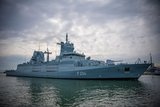
Fincantieri has laid the keel for the Qatar Navy’s first Doha-class corvette at its Muggiano shipyard, the company announced on 27 November.
The 107m corvette has a width of 14.7m and a maximum speed of 28 knots. The vessel is equipped with a combined diesel and diesel plant and can accommodate 112 people onboard, including 98 crew members. It is designed for a wide range of tasks, from surveillance with sea rescue capacities to operating as a combat vessel.
The vessel is capable of operating high-speed boats such as rigid hull inflatable boats via lateral cranes or a hauling ramp located at the far stern. It features a flight deck and hangar that is capable of accommodating one NH90 helicopter.
The vessel will be delivered to the Qatar Navy in 2021.
Fincantieri is building the vessel under a €4 billion contract signed with the Qatar Ministry of Defence in 2016. The contract covers a total of seven surface vessels, including four corvettes, one amphibious vessel landing platform dock and two OPVs.
Related Equipment in Defence Insight



You may also like

More from Naval Warfare
-
![Russia’s uncrewed boat portfolio hints at future naval demand]()
Russia’s uncrewed boat portfolio hints at future naval demand
Ukrainian intelligence has catalogued more than 20 Russian uncrewed surface vessels, revealing a portfolio weighted towards mine warfare and logistics, with implications for Western naval investment.
-
![Ukraine’s new long-range 12m autonomous vessel can deploy other drones]()
Ukraine’s new long-range 12m autonomous vessel can deploy other drones
Ukraine’s UForce unveiled the MV11 uncrewed surface vessel, designed to launch and support other naval drones at sea, fuelling debate over the future of autonomous maritime task groups.
-
![Global submarine suppliers compete for a rapidly shrinking market]()
Global submarine suppliers compete for a rapidly shrinking market
Diminishing submarine competitions worldwide are leaving fewer acquisition opportunities, pushing contractors toward alternatives.
-
![Future frigate programme highlights broader RNZN replacement challenge]()
Future frigate programme highlights broader RNZN replacement challenge
New Zealand’s evaluation of the Mogami and Arrowhead 140 frigate designs reflects a wider push for alliance interoperability, and points to a larger recapitalisation of the Royal New Zealand Navy fleet beyond the current programme.