Italy receives seventh FREMM frigate
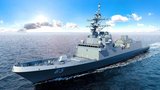
The Italian Navy has received its newest FREMM frigate, Federico Martinengo, at Fincantieri’s shipyard in Muggiano, La Spezia, Fincantieri announced on 24 April.
The frigate - delivered in multipurpose configuration - is the seventh of a series of ten Multi Mission European Frigates being built by Fincantieri as part of the Italian-French FREMM programme, coordinated by the Organisation for Joint Armament Cooperation. Orizzonte Sistemi Navali (51% Fincantieri and 49% Leonardo) is the prime contractor for Italy in the FREMM programme.
The FREMM frigates are 144 meters in length with a displacement at full load of approximately 6,700 tons. The vessels are designed to reach a maximum speed of 27 knots and to provide accommodation for 200 people including crew and staff.
In Italian Navy service the vessels will replace the Lupo and Maestrale classes of vessels, both built by Fincantieri in the 1970s. The vessels will become the backbone of the naval fleet over the next decades, carrying out a range of military and humanitarian operations.




More from Naval Warfare
-
![US Navy to develop an undersea networking capability to support UUV operations]()
US Navy to develop an undersea networking capability to support UUV operations
The NEREUS project aims to enhance and expand the US Navy’s existing communications systems, enabling crewed/uncrewed seabed and subsurface missions.
-
![How the Hedge Strategy will impact the US Navy’s future capabilities]()
How the Hedge Strategy will impact the US Navy’s future capabilities
The US Navy Hedge Strategy is intended to provide a lethal, modular and cost-effective fleet while accepting Washington’s fiscal and industrial constraints.
-
![US Navy and Raytheon explore additional applications for Mk 58 CRAW torpedo]()
US Navy and Raytheon explore additional applications for Mk 58 CRAW torpedo
Designed as an anti-torpedo and anti-submarine capability, the USN and RTX foresee the Compact Rapid Attack Weapon’s potential for deployment from surface ships and aerial and uncrewed platforms.
-
![European navies line up $105.8 billion in unawarded contracts for 2026]()
European navies line up $105.8 billion in unawarded contracts for 2026
France, Germany and Italy lead the way on unawarded naval defence opportunities that could be awarded this year, but across Europe countries are ramping up their spending efforts to face geopolitical challenges.