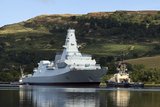
HMS Prince of Wales arrives at home port


The Royal Navy’s second aircraft carrier, HMS Prince of Wales, has arrived at its home port of Portsmouth Naval Base for the first time.
The carrier has spent the past nine weeks at sea carrying out a number of trials, including the landing of a Merlin Mk2 helicopter and a test of the ship’s engines at full power. The sea trials programme tested all 158 essential systems on the ship which includes power and propulsion, radars, communications and essential hotel and platform services.
Simon Lister, managing director, Aircraft Carrier Alliance, said: ‘Today is an important day for our employees and the Royal Navy. Delivering next generation naval capability of this complexity is not only a proud moment for our employees but also showcases the industrial capability within the UK.
‘This programme has brought together the best of British imagination, ingenuity and invention and I am extremely proud of our teams who have shown relentless drive, energy and a continued focus on ensuring we deliver the very best for the Royal Navy.’
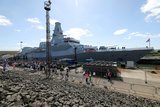
More than £100 million has been spent updating and enhancing the facilities at Her Majesty's Naval Base, Portsmouth, including an upgrade to the Princess Royal Jetty which will be home to both carriers. A new combined heat and power facility has also been established to deliver power to the carriers, increase energy resilience and reduce the carbon footprint of the base.
Once fully operational, the Queen Elizabeth class ships will provide a forward deployed base for the UK’s F-35B aircraft, delivering a carrier strike capability to the UK’s armed forces anywhere in the world.
Related Equipment in Defence Insight

You may also like
More from Naval Warfare
-
![RTX Raytheon enhances SM-3 and SM-6 production capacity]()
RTX Raytheon enhances SM-3 and SM-6 production capacity
The expansion of the Redstone facility in Alabama will enable Raytheon to increase production of Standard Missiles in the location by 50% and support Washington in refilling stockpiles after recent operations have depleted the Pentagon’s reserves.
-
![What the rise of interoperability between Western allies means for defence procurement]()
What the rise of interoperability between Western allies means for defence procurement
Major naval initiatives including the European Patrol Corvette programmes and Norway’s UK partnership-focused purchase of Type 26 frigates point to the growing interest in the advantages of commonality across allied navies.
-
![Kraken’s Royal Navy USV contract signals next step in crewed-uncrewed integration]()
Kraken’s Royal Navy USV contract signals next step in crewed-uncrewed integration
The UK Royal Navy’s rapid procurement of uncrewed platforms aligns with the force’s strategic shift towards a fleet better equipped to handle modern threats.
-
![HMS Anson’s milestone stay in Australia cut short during AUKUS deployment]()
HMS Anson’s milestone stay in Australia cut short during AUKUS deployment
The Astute-class submarine’s visit to Australia was the first time maintenance activity on a UK Royal Navy nuclear submarine had been carried out in the country.
-
![How Operation Epic Fury could reduce US readiness to face China]()
How Operation Epic Fury could reduce US readiness to face China
The offensive against Iran could impact training and maintenance cycles and accelerate the degradation of the US arsenal on top of depleting Washington’s stockpiles.
-
![UK Royal Navy explores modular counter-drone capabilities for future hybrid fleet]()
UK Royal Navy explores modular counter-drone capabilities for future hybrid fleet
The UK MoD is scoping out systems to counter the growing threat of uncrewed aerial systems, with a focus on low-cost modularity and speed to field.