FREMM Tahya Misr transfers to Egypt


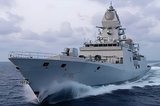
The FREMM Tahya Misr was transferred from shipbuilder DCNS to the Egyptian Navy in a ceremony held on 23 June.
DCNS and Egypt signed the contract for the FREMM multi-mission frigate in February, following which the company carried out outfitting and adaption work for the navy. The company also started training the Egyptian crew from March. Its training programme consisted of theoretical modules, on-land training with simulators and platforms and on-board training at the quayside and sea.
DCNS and its partners will accompany the ship crew for 15 months to safely operate the ship. The company will also provide through-life support services for five years under the contract.
Hervé Guillou, chairman and CEO, DCNS, said: ‘A year ago, DCNS wrote the first lines of a strategic partnership bringing together the group and the Egyptian Navy. Today, this privileged tie has taken on a new dimension. This event constitutes an important step in the crew taking on the FREMM.
‘The supply of this latest-generation frigate comes on top of the contract for four GOWIND 2500 corvettes signed in 2014. We are very proud to supply the Egyptian Navy with high-tech ships which will contribute towards the renewal of their surface-ship fleet.’



More from Naval Warfare
-
![Five years on: where could opportunities emerge next for AUKUS Pillar II?]()
Five years on: where could opportunities emerge next for AUKUS Pillar II?
Payload commonality, combat systems and electronic warfare are emerging as likely priorities as the trilateral partnership balances building submarines with sharing industrial ecosystems.
-
![From the Baltic to the Gulf: where USV procurement is heading next]()
From the Baltic to the Gulf: where USV procurement is heading next
Saildrone’s new Copenhagen base is one sign of a larger shift, as navies globally turn to uncrewed vessels for surveillance and mine clearance.
-
![Quantum sensing gathers pace as navies eye undersea advantage]()
Quantum sensing gathers pace as navies eye undersea advantage
As AI dominates defence conversations, industry increasingly points to quantum sensing as the technology set to change submarine and uncrewed underwater vehicle operations.
-
![Competitive P17B tender marks a shift in Indian Navy frigate procurement]()
Competitive P17B tender marks a shift in Indian Navy frigate procurement
The Indian Navy's P17B programme is expected to combine greater weapons capacity with a competitive domestic construction model, although key systems could remain dependent on international supply chains.