FREMM Aquitaine continues verification test firings


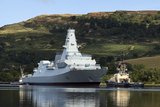
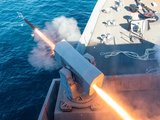
The frigate Aquitaine, a part of the multi-mission frigate program (FREMM), fired an Exocet MM40 surface-to-surface missile on 12 May and a naval cruise missile on 19 May at a DGA missile testing centre off Levant Island.
These tests marked the first time that a European surface ship has fired a European cruise missile. The firings were prepared by the DGA teams, the French Navy, missile manufacturer MBDA, and DCNS. They were held as part of the verification of the FREMMs' technical capabilities before they enter active service.
The firing of these missiles marks a major milestone after the successful firing of an Aster 15 anti-aircraft missile in 2013 and the commissioning of the MU 90 lightweight torpedo on the Caiman marine helicopter on 13 March.
FREMMs are heavily-armed warships with naval cruise missiles, Exocet MM40 anti-ship missiles, Aster anti-aircraft missiles and MU90 anti-submarine torpedoes. They can accommodate a Caiman marine helicopter, special forces and their equipment. A total of six FREMMs are due to be delivered before mid-2019.
Related Equipment in Defence Insight


More from Naval Warfare
-
![US Navy to develop an undersea networking capability to support UUV operations]()
US Navy to develop an undersea networking capability to support UUV operations
The NEREUS project aims to enhance and expand the US Navy’s existing communications systems, enabling crewed/uncrewed seabed and subsurface missions.
-
![How the Hedge Strategy will impact the US Navy’s future capabilities]()
How the Hedge Strategy will impact the US Navy’s future capabilities
The US Navy Hedge Strategy is intended to provide a lethal, modular and cost-effective fleet while accepting Washington’s fiscal and industrial constraints.
-
![US Navy and Raytheon explore additional applications for Mk 58 CRAW torpedo]()
US Navy and Raytheon explore additional applications for Mk 58 CRAW torpedo
Designed as an anti-torpedo and anti-submarine capability, the USN and RTX foresee the Compact Rapid Attack Weapon’s potential for deployment from surface ships and aerial and uncrewed platforms.
-
![European navies line up $105.8 billion in unawarded contracts for 2026]()
European navies line up $105.8 billion in unawarded contracts for 2026
France, Germany and Italy lead the way on unawarded naval defence opportunities that could be awarded this year, but across Europe countries are ramping up their spending efforts to face geopolitical challenges.