


UK’s Fleet Solid Support ship programme deemed on track despite steel supply concerns
Shipbuilders are saying the programme is going ahead on time as the government estimates 7.7 million tonnes of steel are needed for 2026 infrastructure projects.


Fincantieri Marinette Marine has commenced construction of the Royal Saudi Navy’s first Multi-Mission Surface Combatant (MMSC) ship.
Being delivered by Lockheed Martin as prime contractor, the four MMSCs were ordered in 2017 under a foreign military sales (FMS) agreement.
The FMS package request also included equipment to arm the vessels, including combat management systems with five TRS-4D radars. Also included were eight MK-41 Vertical Launch Systems and 532 tactical RIM-162 Evolved Sea Sparrow Missiles.
Saudi Arabia also requested five AN/SWG-l (V) Harpoon ship command launch control systems; eight Harpoon Shipboard Launchers; 48 RGM-84 Harpoon Block II Missiles; five MK-15 Mod 31 SeaRAM Close-In Weapon Systems; 188 RIM 116C Block II Rolling Airframe Missiles; five MK-75 76mm OTO Melara gun systems; and 48 50-calibre machine guns.

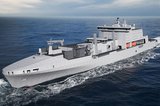
Shipbuilders are saying the programme is going ahead on time as the government estimates 7.7 million tonnes of steel are needed for 2026 infrastructure projects.

In an exclusive interview with Shephard, Raytheon’s VP of Shipboard Missiles disclosed what improvements the company plans to offer for the Sea Sparrow NSV.

Delays in the construction of the Polar Security Cutter – the future substitute for the Polar Star – are likely to prolong the ageing icebreaker’s service time even more, putting the USCG in a risky position.

The adaptable design of Babcock’s Arrowhead 140 frigate, already selected by the UK Royal Navy and Poland, has led to more orders from Indonesia while other countries continue to weigh it up.

The presence of the USS Abraham Lincoln Carrier Strike Group in the Persian Gulf means additional naval and aerial capabilities, which provides the US with multiple attacking options.

The US Navy’s acceleration of its laser weapon development initiatives reflects a decisive shift towards ultimately having a “laser on every ship” across tomorrow’s surface fleet.

Connect with us on socials


