Firing trials of Sea Ceptor complete


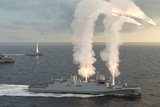
The Royal Navy has successfully completed First of Class firing trials of the Sea Ceptor air defence system on board HMS Argyll, MBDA announced on 20 December.
These final qualification firings saw Sea Ceptor tested against complex scenarios, including multiple simultaneous threats.
Following the completion of Sea Ceptor’s development testing on HMS Argyll, the weapon system is now being rolled out to the Royal Navy’s other Type 23 frigates, where it will replace the Sea Wolf weapon system. The first of a series of installation test firings has been successfully completed on HMS Westminster. Each Sea Ceptor platform will similarly complete an installation test firing in due course as they prepare to re-join frontline service after their refits.
The Sea Ceptor system, which uses MBDA’s Common Anti-air Modular Missile (CAMM), features a powerful rocket motor that provides double the range of Sea Wolf and an active radar-seeker that allows the missile to engage targets without the need for complex and costly target illuminators.
Nick Neale, manager for Sea Ceptor programme at MBDA, said: ‘The performance and capabilities of Sea Ceptor have been fully demonstrated in these trials by the Royal Navy. Recognising the complexity of the new system, the consistent level of success achieved is significant and testament to the quality of MBDA’s verification and validation process.’

You may also like

More from Naval Warfare
-
![How France’s SNLE 3G programme is reshaping the naval nuclear industrial base]()
How France’s SNLE 3G programme is reshaping the naval nuclear industrial base
Extending far beyond a four-submarine replacement programme, France’s ballistic missile submarine effort is a decades-long industrial effort designed to preserve the country’s ability to build and sustain nuclear-powered strategic platforms.
-
![China’s mineral processing dominance exposes naval supply chain vulnerabilities]()
China’s mineral processing dominance exposes naval supply chain vulnerabilities
Competition for critical minerals, and China’s dominance of their processing, is emerging as a decisive factor in future naval procurement programmes.
-
![Suppliers await next step in Australia’s mine warfare transition]()
Suppliers await next step in Australia’s mine warfare transition
Australia’s mine countermeasure capability remains in flux as the Huon-class nears retirement, but accelerated investment in autonomous systems is opening a path for industry.
-
![Can the US Navy ask Indo-Pacific allies to do more while training with them less?]()
Can the US Navy ask Indo-Pacific allies to do more while training with them less?
As the Iran War draws US ships and marine corps units away from the Indo-Pacific, curtailed exercises and a temporary carrier gap are exposing tensions between Washington’s demand for more self-reliant allies and the joint training needed to realise that ambition.
-
![How could Rheinmetall’s GMF 140 fit with ongoing programmes in North America?]()
How could Rheinmetall’s GMF 140 fit with ongoing programmes in North America?
With Canada committed to its River-class replacement and the USN pursuing a lower-cost frigate, Rheinmetall will need to demonstrate where the GMF 140 can fill a capability gap in the North American fleet.