US wants Turkey to buy Patriot missiles


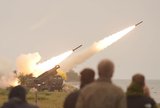
The US is trying to persuade NATO partner Turkey to purchase the Patriot surface-to-air missile system, a US official said 16 July, instead of rival Russian equipment.
The NATO alliance is worried Turkey's intent to deploy Russia's S-400 anti-aircraft missile system could provide Moscow with a trove of intelligence on Western war equipment.
The planned purchase has become a major source of friction, and US lawmakers have warned Ankara could face sanctions if it goes ahead with the purchase of the S-400.
Tina Kaidanow, acting assistant secretary of the State Department's Bureau of Political Military Affairs, said: ‘We are concerned that by purchasing these systems from the Russians, it will be supportive of some of the least good behavior that we have seen from them.’
She added that the US wants to ensure the systems its allies buy ‘remain supportive of the strategic relationship between us and our allies.’
‘In the case of Turkey, that, in our view, is Patriots and we're trying to give the Turks some understanding of what we can do with respect to Patriots.’
The US last month warned it could block the delivery of F-35 stealth jets to Turkey if Ankara buys Russia's S-400 system.
Related Equipment in Defence Insight

You may also like
More from Defence Notes
-
![Estonia opts for smart, adaptable and cooperative solutions in the face of Russian threat]()
Estonia opts for smart, adaptable and cooperative solutions in the face of Russian threat
Estonian-made equipment is being put through the toughest of evaluations in the hands of Ukrainian soldiers resisting the full-scale Russian invasion which began in 2022. The country has long seen the threat and is continuing to adapt for the future.
-
![Estonia boosting defence industry with lessons from Ukraine, says country’s economic minister]()
Estonia boosting defence industry with lessons from Ukraine, says country’s economic minister
Estonia is looking to boost its local defence industry with directed funding, industry parks, support through international orders for equipment and rapid prototyping.
-
![UK faces cost of balancing defensive capabilities abroad as Iran conflict widens]()
UK faces cost of balancing defensive capabilities abroad as Iran conflict widens
The UK has recently deployed a Type 45 destroyer to Cyprus and has bolstered its presence in the Middle East in recent weeks with supporting air power to protect neighbouring countries’ air defences.
-
![White House calls on Pentagon contractors to “rapidly and aggressively” boost weapon production]()
White House calls on Pentagon contractors to “rapidly and aggressively” boost weapon production
Intended to sustain Operation Epic Fury against Iran, efforts to increase the production of weapons and ammunition could expose long-standing weaknesses in the US defence industrial base.
-
![India’s strategic defence footprint expansion could be accelerated by Iran-Israel conflict]()
India’s strategic defence footprint expansion could be accelerated by Iran-Israel conflict
The latest escalation between Iran and Israel could shape New Delhi’s next-generation shield as India deepens cooperation with Israel on missile defence and drone production.
-
![Is the US magazine of air defence interceptors deep enough to sustain a long campaign against Iran?]()
Is the US magazine of air defence interceptors deep enough to sustain a long campaign against Iran?
The Pentagon spent a considerable number of THAAD and SM-3 rounds to defend against Iranian missiles in 2025 and has not fully replenished its reserves.