US Navy commanders face negligent homicide charges


The commanders of two US Navy ships involved in collisions that left 17 sailors dead face charges including negligent homicide and dereliction of duty, the US Navy announced on 16 January.
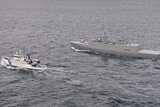
The USS John S. McCain collided with an oil tanker in August 2017, killing 10 sailors, while USS Fitzgerald smashed into a cargo ship in June, leaving seven dead.
According to the US Navy, court martial proceedings and hearings are being convened to review evidence supporting possible criminal charges against Fitzgerald members, as well as the commander of the John S. McCain.
The commanding officer, two lieutenants and a lieutenant junior grade from the Fitzgerald and the commander of the John S. McCain face charges including dereliction of duty, hazarding a vessel and negligent homicide.
The collisions highlighted leadership failures and the stresses of frequent deployments across the Pacific region, but also shined a spotlight on sailors not paying proper attention in busy shipping lanes.
ADM John Richardson, chief of US naval operations, said: ‘Both of these accidents were preventable and the respective investigations found multiple failures by watch standers that contributed to the incidents.’


More from Defence Notes
-
![Canada seeks to strengthen industrial ties with the US on classified programmes]()
Canada seeks to strengthen industrial ties with the US on classified programmes
Ottawa explores expanding defence-industrial cooperation with Washington into sensitive programmes, an approach that could reshape NORAD modernisation, strengthen North American supply chains and create new opportunities for defence contractors.
-
![UK’s latest defence robotics and autonomy competition looks to break new ground]()
UK’s latest defence robotics and autonomy competition looks to break new ground
The UK Ministry of Defence is backing early-stage, high-risk autonomy concepts that could redefine how military systems are developed and deployed.
-
![How AI is reshaping defence procurement through sustainment]()
How AI is reshaping defence procurement through sustainment
Artificial intelligence is not just changing how defence equipment is maintained but how defence programmes are won, creating new opportunities for industry by influencing acquisition decisions and shaping competition.
-
![NATO signs agreements worth billions of dollars on missiles, air defence and aircraft]()
NATO signs agreements worth billions of dollars on missiles, air defence and aircraft
Announcements on aircraft deals and agreements for trans-alliance cooperation to boost the production and purchase of weapons and equipment were key takeaways from this week’s NATO summit.
-
![Ukraine experience forces rethink of counter-UAS doctrine]()
Ukraine experience forces rethink of counter-UAS doctrine
A panel session at Eurosatory 2026 brought together industry, academia and the French armed forces to assess how Ukraine’s battlefield reality is reshaping counter-UAS (CUAS) technology, air defence doctrine and Western procurement priorities.