US fighter jet crashes in Germany
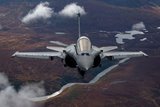
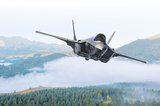
An American F-16 fighter jet crashed and its pilot ejected to safety near the city of Trier in western Germany on Tuesday, the German air force told AFP.
The airman was ‘recovered with minor injuries’ after crashing during a ‘routine training mission’, the US Air Force base at nearby Spangdahlem confirmed in a statement.
Local police said they rushed to the scene of the crash near the village of Zemmer after receiving multiple emergency calls around 3:15 pm local time (1315 GMT).
Authorities blocked off a large zone around the crash site including several roads, the police statement added, urging drivers to avoid the area.
Germany is no stranger to military aircraft crashes, including in its own shortage-plagued Bundeswehr armed forces.
In June this year, two of the air force’s Eurofighter jets crashed after colliding in mid-air in northeastern Germany. One of the pilots was killed, while the other ejected to safety.
Less than a week later, a helicopter pilot died when his aircraft crashed near an army training centre.
The last American military crash in Germany was in 2015, when one of the Spangdahlem base’s F-16 fighters went down in northern Bavaria.
In that incident, the pilot survived after ejecting from the plane.




More from Defence Notes
-
![“Capital follows confidence” as defence courts private money]()
“Capital follows confidence” as defence courts private money
Outside investment and the direction in which venture money flows may reveal what defence will buy years before formal programmes begin.
-
![Canada’s new military drone marketplace targets rapid acquisition pipeline]()
Canada’s new military drone marketplace targets rapid acquisition pipeline
The Department of National Defence expects initial contracts to deliver thousands of uncrewed systems, but has yet to establish the quantities, capability mix or deadline behind Ottawa’s promised tenfold expansion.
-
![Ukraine turns legacy Kongsberg land turrets into semi-autonomous USV weapons]()
Ukraine turns legacy Kongsberg land turrets into semi-autonomous USV weapons
The company told Shephard that Ukraine is operating modified Protector weapon stations originally supplied for armoured vehicles, with human operators authorising engagements from hundreds of kilometres away.
-
![UK urged to prioritise sea, air and space over heavy armour]()
UK urged to prioritise sea, air and space over heavy armour
A report from the Council on Geostrategy argues the UK should move away from a traditional balanced force and shift investment to naval, air and space capabilities, backed by a larger fleet of attack submarines and deeper AUKUS integration.
-
![Orchestrating operational readiness across every defence domain]()
Orchestrating operational readiness across every defence domain
Are all systems ready for the next mission? Have upgrades been applied? Are all assets aligned to deploy together, on time and fully prepared? In modern defence operations, readiness is no longer measured platform by platform. It is measured by how well people, assets, data and decisions move together — across land, sea and air.