


From systems integrator to multi-domain solutions provider (video)
Philipp von Brandenstein, Head of Corporate Communications at Rheinmetall, explains how Eurosatory 2026 marked a new stage in the company's evolution.


WestJet president and CEO Sean Durfy has resigned and will step down on 1 April 2010 to be replaced by the airline’s EVP operations, Gregg Saretsky.
Durfy, who has cited personal reasons for his departure, will also resign from the board of directors on 1 April. “This was a very difficult decision for me; however, after careful consideration, I have decided that this is best for me and my family,” Durfy explained. “Those things I set out to accomplish at WestJet have now been achieved and I believe this is an appropriate time to allow others to carry the torch while I spend more time with my young family.”
Clive Beddoe, WestJet chairman, added, “We will miss Sean’s passion and leadership at the executive and board level and we sincerely thank him for his tremendous contributions to WestJet over the past several years.”
Durfy’s successor, Gregg Saretsky, joined WestJet in June 2009 as vice-president, WestJet Vacations, before assuming the role of executive vice-president, operations, in October 2009.
“As a 25-year airline industry veteran, Gregg has been a valuable member of WestJet’s executive team. He brings a wealth of knowledge and experience to the president and CEO role and we are confident his background will provide the leadership and experience required to achieve our strategic plans,” remarked chairman Beddoe.
Durfy has agreed to remain with WestJet until 1 September 2010, and will assist the company with the transition. An executive search for a new executive vice-president, operations, is under way.


Philipp von Brandenstein, Head of Corporate Communications at Rheinmetall, explains how Eurosatory 2026 marked a new stage in the company's evolution.

The US Department of Defense has requested new contracting authorities from Congress, using the Army's MV-75 Cheyenne programme to demonstrate how competition, digital engineering and closer industry collaboration could accelerate acquisitions.
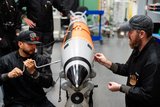
The US government plans to accelerate production even further after achieving key B61-13 milestones months ahead of schedule, as the programme advances amid growing US-China strategic competition.

General Dynamics Land Systems-Canada is the country’s first strategic partner under the Defence Industrial Strategy’s Strategic Partnership Framework, an effort to provide companies with confidence to invest and boost the defence labour force.
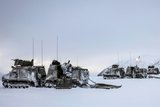
The UK’s Minister for the Armed Forces Louise Sandher-Jones made her first appearance in the role before the House of Commons Defence Committee this week to highlight efforts to improve capability in the High North.

Ottawa explores expanding defence-industrial cooperation with Washington into sensitive programmes, an approach that could reshape NORAD modernisation, strengthen North American supply chains and create new opportunities for defence contractors.

Connect with us on socials


