RTX set for missile defence deal with Japan’s Mitsubishi Electric
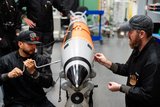
Japanese authorities have previously shown interest in Raytheon's SPY-6. (Photo: Raytheon)
Rare deal would see a Japanese manufacturer supply a foreign armed force ahead of a domestic defence force.


Japan’s Mitsubishi Electric has entered the final stages of a deal to supply US defence manufacturer RTX with a major component for an advanced missile defence radar system.
According to a report by Nikkei Asia, Mitsubishi Electric will provide RTX with power supply equipment for the SPY-6 air and missile defence radar, which has been in development for the US Navy.
In July 2022, Shephard reported that Japanese authorities had shown an interest in SPY-6 radars at last year’s Farnborough International Air Show. The radar has demonstrated its capabilities to defend against ballistic and cruise missiles.
According to Nikkei Asia’s report, the Arleigh Burke-class guided-missile destroyer USS Jack H. Lucas became the first ship to be equipped with the SPY-6, as its was commission on October 7 in Florida.
The report noted that the deal between the two firms, which could ‘reach several hundred million dollars’, was rare in the sense that a Japanese defence company has been selected as a major supplier for a US defence company. It also said it was significant that a Japanese defence contractor would provide equipment to a US armed force before supplying its own defence forces.
In June, the Japanese Government passed a bill providing new funding for domestic companies to convert their equipment for export and has been actively encouraging its domestic defence industry to expand overseas.
In October, Mitsubishi Electric signed an agreement with the Australian Defence Department for joint equipment development.
Related Equipment in Defence Insight



More from Defence Notes
-
![Orchestrating operational readiness across every defence domain]()
Orchestrating operational readiness across every defence domain
Are all systems ready for the next mission? Have upgrades been applied? Are all assets aligned to deploy together, on time and fully prepared? In modern defence operations, readiness is no longer measured platform by platform. It is measured by how well people, assets, data and decisions move together — across land, sea and air.
-
![How deepening AI usage can boost efficiency and maximise effects for forces]()
How deepening AI usage can boost efficiency and maximise effects for forces
Saab has outlined how it is using artificial intelligence to make training more like electronic gaming, while the UK’s Power Size Technologies is applying the same technology to better evaluate and design vehicle capability, moving AI-enabled innovation further upstream from the frontline.
-
![From systems integrator to multi-domain solutions provider (video)]()
From systems integrator to multi-domain solutions provider (video)
Philipp von Brandenstein, Head of Corporate Communications at Rheinmetall, explains how Eurosatory 2026 marked a new stage in the company's evolution.
-
![US Pentagon pushes for major reform of defence acquisition system]()
US Pentagon pushes for major reform of defence acquisition system
The US Department of Defense has requested new contracting authorities from Congress, using the Army's MV-75 Cheyenne programme to demonstrate how competition, digital engineering and closer industry collaboration could accelerate acquisitions.
-
![US speeds up B61-13 nuclear bomb production as programme moves further ahead of schedule]()
US speeds up B61-13 nuclear bomb production as programme moves further ahead of schedule
The US government plans to accelerate production even further after achieving key B61-13 milestones months ahead of schedule, as the programme advances amid growing US-China strategic competition.