Opinion: Gulf deference to Western influence may be ending


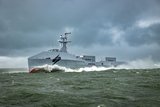
The UK’s opening of its new naval base in Bahrain, which will be known as the Naval Support Facility, represents the first permanent UK naval base in over 50 years and a significant policy shift.
Since 1971, when the last permanent forces pulled out, UK defence policy has regarded commitments in the Gulf as a short-term operation, not a long-term commitment for which forces are maintained and supported. As one weary observer put it, ‘since 1980, when the Royal Navy began the Armilla Patrol, the UK has done nearly 40 six-month operational tours of the Gulf’.
Our news & analysis is now part of Defence Insight®
A Basic-level or higher Defence Insight subscription is now required to view this content.




More from Defence Notes
-
![“Engage with the operational problem”: how software innovation can boost UK defence]()
“Engage with the operational problem”: how software innovation can boost UK defence
In Conversation… Shephard’s Andrew White talks to Zafer Şen, CEO and co-founder of OBSS, about the future of command-and-control software in the age of artificial intelligence, and his company’s ambitions in the UK defence market.
-
![“Capital follows confidence” as defence courts private money]()
“Capital follows confidence” as defence courts private money
Outside investment and the direction in which venture money flows may reveal what defence will buy years before formal programmes begin.
-
![Canada’s new military drone marketplace targets rapid acquisition pipeline]()
Canada’s new military drone marketplace targets rapid acquisition pipeline
The Department of National Defence expects initial contracts to deliver thousands of uncrewed systems, but has yet to establish the quantities, capability mix or deadline behind Ottawa’s promised tenfold expansion.
-
![Ukraine turns legacy Kongsberg land turrets into semi-autonomous USV weapons]()
Ukraine turns legacy Kongsberg land turrets into semi-autonomous USV weapons
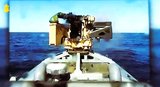
The company told Shephard that Ukraine is operating modified Protector weapon stations originally supplied for armoured vehicles, with human operators authorising engagements from hundreds of kilometres away.