


From systems integrator to multi-domain solutions provider (video)
Philipp von Brandenstein, Head of Corporate Communications at Rheinmetall, explains how Eurosatory 2026 marked a new stage in the company's evolution.


Despite a 7.9% decline in revenues, Lufthansa Systems ended its 2009 fiscal year with a profit of €16 million.
The revenues decrease took the income down to €605 million. Of this, €361 million was generated with companies in the Lufthansa Group, while revenues with customers outside the Group fell to €244 million (a 12.5% decrease). This decline, described by LSY as “disproportionate” is attributed in part to former external companies now being part of the Lufthansa Group. The operating profit of €16 million was a decrease from the previous year’s €40 million, on account of the lower revenues.
”The fact that we achieved a profit despite a significant decline in revenues shows that we are well positioned with our structures and products,” said Wolfgang Gohde, CEO and chairman of the Executive Board of Lufthansa Systems. ”The changes we initiated during the past few years have made our company leaner, more flexible and more customer-focused. We were therefore able to respond quickly to market developments, adjust our capacities and reduce our costs.”
LSY believes that the total airline spending on IT services will grow only slightly in the coming years due to the carriers’ strained economic situation. However, it sees the market for IT outsourcing growing because airlines will increasingly replace their own systems with external solutions.
The company expects revenues to decline again in 2010 on account of economic influences and the ongoing streamlining of the portfolio in the Infrastructure Services division. The measures initiated in 2009 for reducing material costs and aligning internal personnel capacity with the production volumes will probably cause the operating result in 2010 to be higher than that of the past fiscal year, says LSY.


Philipp von Brandenstein, Head of Corporate Communications at Rheinmetall, explains how Eurosatory 2026 marked a new stage in the company's evolution.

The US Department of Defense has requested new contracting authorities from Congress, using the Army's MV-75 Cheyenne programme to demonstrate how competition, digital engineering and closer industry collaboration could accelerate acquisitions.
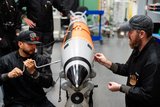
The US government plans to accelerate production even further after achieving key B61-13 milestones months ahead of schedule, as the programme advances amid growing US-China strategic competition.

General Dynamics Land Systems-Canada is the country’s first strategic partner under the Defence Industrial Strategy’s Strategic Partnership Framework, an effort to provide companies with confidence to invest and boost the defence labour force.

The UK’s Minister for the Armed Forces Louise Sandher-Jones made her first appearance in the role before the House of Commons Defence Committee this week to highlight efforts to improve capability in the High North.
Ottawa explores expanding defence-industrial cooperation with Washington into sensitive programmes, an approach that could reshape NORAD modernisation, strengthen North American supply chains and create new opportunities for defence contractors.

Connect with us on socials


