


From systems integrator to multi-domain solutions provider (video)
Philipp von Brandenstein, Head of Corporate Communications at Rheinmetall, explains how Eurosatory 2026 marked a new stage in the company's evolution.


American Eagle Airlines has reported December 2009 and full calendar year traffic figures for itself and its wholly-owned subsidiary, Executive Airlines.
In December, American Eagle itself generated 581,732,000 revenue passenger miles (RPMs), a 7.2% increase on December 2008’s 542,624,000. Available seat miles recorded went up by 6.2% to 802,558,000 from 755,989,000 for the respective periods.
This resulted in a slight rise of 0.7 percentage points (pp) in Eagle’s load factor, up to 72.5% from 71.8%. The number of passengers boarded in December was 1,296,631, a 7.8% increase on the 1,203,115 carried in 2008.
Executive Airlines recorded 45,300,000 RPMs in December compared with 45,587,000 in December 2008, a 0.6% decrease. ASMs dropped by 1.0% to 80,529,000 from 81,320,000.
The load factor rose by 0.2 pp to 56.3% from 56.1% in December 2008, while passengers boarded numbered 230,713, up 5.7% from 218,211.
For the whole of 2009, American Eagle generated 7,145,639,000 RPMs, 3.2% down on 2008’s 7,382,935,000, while ASMs fell 5.4% to 9,809,580,000 from 10,369,728,000.
The full year load factor for Eagle was 72.8%, up 1.6 pp from 2008’s figure of 71.2%, with the airline carrying 16,012,967 passengers compared with 16,558,248 in 2008, a 3.3% decrease.
In 2009, Executive Airlines recorded 544,747,000 RPMs, slightly down – by 0.4% – from 2008’s 542,444,000. ASMs were up by 2.8% at 947,616,000 from 922,117,000.
These figures resulted in an annual load factor of 57.5%, down 1.3 pp from the 58.8% recorded for 2008. Passengers carried in 2009 totalled 2,735,866, an increase of 7.5% year-on-year over 2008’s figure of 2,544,835.


Philipp von Brandenstein, Head of Corporate Communications at Rheinmetall, explains how Eurosatory 2026 marked a new stage in the company's evolution.

The US Department of Defense has requested new contracting authorities from Congress, using the Army's MV-75 Cheyenne programme to demonstrate how competition, digital engineering and closer industry collaboration could accelerate acquisitions.

The US government plans to accelerate production even further after achieving key B61-13 milestones months ahead of schedule, as the programme advances amid growing US-China strategic competition.

General Dynamics Land Systems-Canada is the country’s first strategic partner under the Defence Industrial Strategy’s Strategic Partnership Framework, an effort to provide companies with confidence to invest and boost the defence labour force.
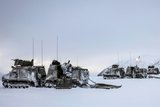
The UK’s Minister for the Armed Forces Louise Sandher-Jones made her first appearance in the role before the House of Commons Defence Committee this week to highlight efforts to improve capability in the High North.

Ottawa explores expanding defence-industrial cooperation with Washington into sensitive programmes, an approach that could reshape NORAD modernisation, strengthen North American supply chains and create new opportunities for defence contractors.

Connect with us on socials


