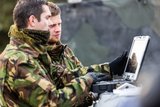
Coronavirus hits ROK armed forces


The Ministry of National Defense (MND) of the Republic of Korea (ROK) confirmed today via social media that 13 members of its armed forces have tested positive for the COVID-19 coronavirus.
Some 350 people have been quarantined who are believed to have been in contact with those infected. In a tweet, the MND added that there are ‘7,500 preventative quarantine persons in accordance with the strengthened military standards’.
The Korea Herald earlier reported that eight COVID-19 cases were confirmed in the army with one each in the navy, air force and marine corps.
The MND also announced that, as of 24 February, ‘all field and school-based training has been controlled and replaced by garrison training. Units currently in field training have returned to their bases in the shortest possible time’.
There are concerns that COVID-19 could begin to spread in barracks, and the MND is advising military personnel to self-isolate if they begin experiencing symptoms.


More from Defence Notes
-
![Ukraine turns legacy Kongsberg land turrets into semi-autonomous USV weapons]()
Ukraine turns legacy Kongsberg land turrets into semi-autonomous USV weapons
The company told Shephard that Ukraine is operating modified Protector weapon stations originally supplied for armoured vehicles, with human operators authorising engagements from hundreds of kilometres away.
-
![UK urged to prioritise sea, air and space over heavy armour]()
UK urged to prioritise sea, air and space over heavy armour
A report from the Council on Geostrategy argues the UK should move away from a traditional balanced force and shift investment to naval, air and space capabilities, backed by a larger fleet of attack submarines and deeper AUKUS integration.
-
![Thales: deployment speed to determine winners in ‘production versus production’ era]()
Thales: deployment speed to determine winners in ‘production versus production’ era
At its technology summit in London, attended by Shephard, Thales UK examined the importance of speed to delivery, the growing focus on cross-domain capabilities and how procurement reform could be crucial for future battlefield advantage.
-
![Orchestrating operational readiness across every defence domain]()
Orchestrating operational readiness across every defence domain
Are all systems ready for the next mission? Have upgrades been applied? Are all assets aligned to deploy together, on time and fully prepared? In modern defence operations, readiness is no longer measured platform by platform. It is measured by how well people, assets, data and decisions move together — across land, sea and air.