“We need GCAP” to face evolving threats says RAF chief
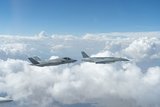
The aim of the Global Air Combat programme is to introduce a new sixth-generation aircraft, ‘Tempest’, into service by 2035. (Photo: BAE Systems)
The UK Royal Air Force’s (RAF’s) chief of the air staff discussed the current state of the RAF and its need to be “match fit” for a changing warfare threat.


Air Chief Marshall Sir Richard Knighton, chief of the air staff for the RAF, has reemphasised the importance of next-generation capabilities as part of the RAF’s operational priorities to ensure air superiority, improve deterrence and evolve to meet growing threats.
The “proliferation of stealth capabilities” from adversaries including the Chinese J-20 fighter, the Russian Su-57 and low-grade air weapons, Knighton said, mean that “[the RAF] needs to be planning for the next generation capabilities. That’s why we need GCAP”.
Speaking during the Royal United Services Institute’s (RUSI’s) Lord Trenchard Memorial lecture on 11 November on the Royal Air Force’s (RAF) current and
Our news & analysis is now part of Defence Insight®
A Basic-level or higher Defence Insight subscription is now required to view this content.

More from Air Warfare
-
![UK eyes lightweight satellite communications for UAVs]()
UK eyes lightweight satellite communications for UAVs
The UK is seeking to extend the operational reach of uncrewed aerial vehicles, reflecting growing demand for compact, energy-efficient technology to support beyond-line-of-sight operations.
-
![The new generation of defence companies emerging from the US UAV boom]()
The new generation of defence companies emerging from the US UAV boom
As the Pentagon accelerates procurement of low-cost, lethal UAVs through its Drone Dominance Program, emerging suppliers will need to demonstrate manufacturing capacity, supply chain resilience and reliability.
-
![US Coast Guard faces key procurement decisions after C-130J and MQ-9B orders]()
US Coast Guard faces key procurement decisions after C-130J and MQ-9B orders
The service is updating several parts of its aviation fleet including fixed-wing and rotary-wing aircraft and procuring uncrewed aircraft to boost its maritime surveillance.