USN Growlers undergo structural and mission systems modification
Airborne Electronic Attack System Enhancements will be added to the EA-18G fleet.


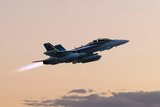
Boeing has begun a five-year modification programme for the entire USN EA-18G Growler fleet with the induction of the first EW aircraft at Naval Air Station Whidbey Island.
‘The modifications are focused on updating the jets’ structural and mission systems architecture, enabling future capability growth for the Navy’s 160 Growler aircraft,’ Boeing announced in a statement on 19 March.
Full-rate modification is expected to start in June 2021. The ALQ-218 receiver system will receive the Airborne Electronic Attack System Enhancements modification, enabling the Growler to operate in ‘increasingly complex electromagnetic environments’, according to Boeing.
According to Shephard Defence Insight, the ALQ-218 utilises a combination of short-, medium- and long-baseline interferometer techniques, with a patented passive ranging algorithm, to provide geo-location of emitters for cueing jammers and other onboard sensors such as EO/IR sensors and radar.
As part of our promise to deliver comprehensive coverage to our Defence Insight and Premium News subscribers, our curated defence news content provides the latest industry updates, contract awards and programme milestones.
Related Equipment in Defence Insight


More from Air Warfare
-
![AI-controlled F-16s advance towards autonomous multi-aircraft operations in US]()
AI-controlled F-16s advance towards autonomous multi-aircraft operations in US
The US plans to progressively expand VENOM/AIR testing from single-aircraft flights to multi-platform autonomous operations over the next 12–24 months, generating data that could support future US military AI programmes, including Collaborative Combat Aircraft.
-
![Attack drones versus CUAS – the future of warfare or just another trend?]()
Attack drones versus CUAS – the future of warfare or just another trend?
Demand signals for counter-drone technology are strong and the market is becoming crowded, but is this really the beginning of a new phase of warfare or will commentators be talking about something else 10 years from now?
-
![The 2020s: a decade of UAV spending growth]()
The 2020s: a decade of UAV spending growth
Total annual drone spending has increased nearly sixfold since the start of the decade, from $2.9 billion in 2020 to $16.3 billion in 2028, with Europe leading the rise.