USAF Super Hercules set to benefit from longer-lasting brakes
A USAF airman replaces a hubcap of a front wheel belonging to a C-130J Super Hercules. (Photo: USAF/Senior Airman Jared Trimarchi)
Collins Aerospace is providing wheels and brakes for USAF C-130Js that last up to eight times longer than existing equipment.


The USAF and Lockheed Martin have selected Collins Aerospace to provide wheels and brakes for 60 C-130J Super Hercules aircraft currently in production.
Collins noted in a 20 September statement that its brakes (featuring DURACARB carbon heat sink material) ‘can last up to eight times longer than the C-130’s existing equipment, helping operators reduce maintenance time and cost’.
The company also claimed that its C-130 brakes can last for up to 2,000 landings per overhaul, compared to 250 landings per overhaul with the existing C-130 brake system.
‘At the same time, Collins’ brakes are capable of handling higher energy than the aircraft’s existing equipment, which increases the safety margin when stopping heavily loaded C-130s,’ it added.
Shephard reported in April that Collins is developing a new wheel and carbon brake system for the entire USAF B-52H Stratofortress fleet, and the company also supplies wheels and carbon brakes for other Lockheed Martin military aircraft such as the F-16 Fighting Falcon and U-2 Dragon Lady.
Related Equipment in Defence Insight


More from Air Warfare
-
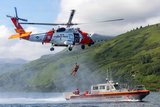
![US Coast Guard faces key procurement decisions after C-130J and MQ-9B orders]()
US Coast Guard faces key procurement decisions after C-130J and MQ-9B orders
The service is updating several parts of its aviation fleet including fixed-wing and rotary-wing aircraft and procuring uncrewed aircraft to boost its maritime surveillance.
-
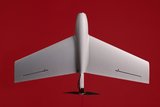
![AUSA 2026: New multiwarhead loitering munition enters increasingly competitive market]()
AUSA 2026: New multiwarhead loitering munition enters increasingly competitive market
Heaviside Industries has unveiled its new Tyr loitering munition at AUSA 2026 in Washington, DC, joining a growing field of manufacturers seeking to capitalise on billions of dollars in anticipated military spending.
-
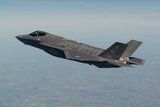
![Middle Eastern demand opens fresh export prospects for Lockheed Martin’s F-35 fighter jet]()
Middle Eastern demand opens fresh export prospects for Lockheed Martin’s F-35 fighter jet
A proposed Saudi Arabian purchase of 48 stealth fighters could signal a broader regional opportunity for the F-35 as European programmes mature.
-
![US military plans multi-UAV trials with Northrop Grumman quantum-navigated Lumberjack]()
US military plans multi-UAV trials with Northrop Grumman quantum-navigated Lumberjack
An undisclosed US military branch is preparing to evaluate multiple Lumberjack Group 3 drones equipped with SandboxAQ’s AQNav magnetic-navigation system. Shephard spoke with Northrop Grumman and SandboxAQ to find out more.
-
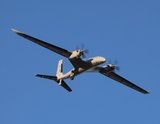
![Akinci: How Baykar turned the UAV into an African and Middle Eastern export success]()
Akinci: How Baykar turned the UAV into an African and Middle Eastern export success
From billion-dollar industrial partnerships in the Middle East to rapid military off-the-shelf deliveries in Africa, Baykar has tailored the Akinci to the needs of very different customers. Defence Insight data shows how flexibility, price and Turkish supply-chain independence have helped drive exports.