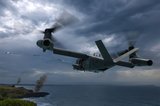
US Navy tests new comms pod for Marine Corps’ MQ-9A Reaper
The MQ-9 Reaper provides marines with a long-range intelligence, surveillance, and reconnaissance capability. (Photo: US Marine Corps)
The pod, named SkyTower II (STII) was tested ahead of the system’s initial operational capability (IOC) in 2026.


The United States Navy (USN) has received and tested the first SkyTower II (STII) network extension pod for the Marine Corps’ MQ-9A Reaper, Naval Air Systems Command (NAVAIR) has announced.
The STII is a network extension pod that, according to NAVAIR, improves the MQ-9A’s intelligence, surveillance and reconnaissance (ISR) capabilities.
Designed to enhance cross-domain communication capabilities and communications between spread out forces, the pod was successfully tested on the Marine Corps’ MQ-9A Reaper at Naval Air Station Patuxent River in February.
Related Articles
Netherlands upgrades MQ-9A Reaper fleet
“The programme is excited to deliver SkyTower II for testing, marking a major milestone in our development journey,” said Capt. Dennis Monagle, Multi-Mission Tactical UAS program manager.
“With robust system and integration testing now underway, we remain on track to achieve initial operating capability this year, delivering critical capability to the US Marine Corps and the joint forces.”
According to NAVAR, the Air Test and Evaluation 24 squadron conducted several different tests on the integrated pod, which included hoisting the aircraft in an anechoic chamber while providing power and satellite link control.
Over the next “several months” the team will carry out final tests before delivering the upgraded MQ-9As to the Marine Unmanned Aerial Vehicle Squadron 3 (VMU-3) fleet.
The VMU-3 are reportedly set to be the first unit to deploy the upgraded system in 2026. In 2022, a US$135.8 million contract was awarded by the USN to General Atomics Aeronautical Systems (GA-ASI) for eight MQ-9A Reapers to meet the future requirements for the Marine Corps Force Design 2030 vision.
Related Equipment in Defence Insight



More from Air Warfare
-
![July air forces review: Farnborough steals the headlines as programmes develop]()
July air forces review: Farnborough steals the headlines as programmes develop
The biannual Farnborough International Airshow 2026 was the backdrop in July for scores of deals, partnerships and announcements, including developments in the multinational next-generation Global Combat Air Programme and the UK’s $486 million trainer aircraft requirement.
-
![FIA 2026: Bell highlights MOSA-driven growth path for MV-75 Cheyenne]()
FIA 2026: Bell highlights MOSA-driven growth path for MV-75 Cheyenne
Bell Flight’s modular open-systems approach for the US Army’s MV-75 Cheyenne could open doors for international allies and suppliers once locked out by closed rotorcraft architectures.
-
![Maximise survivability with advanced electronic warfare (video)]()
Maximise survivability with advanced electronic warfare (video)
BAE Systems’ all-digital EW delivers 360-degree threat awareness in contested environments, boosts survivability, and cuts lifecycle costs.
-
![US Air Force seeks avionics upgrades for ageing T-38 Talon as T-7A Red Hawk delays persist]()
US Air Force seeks avionics upgrades for ageing T-38 Talon as T-7A Red Hawk delays persist
The USAF is looking for commercial avionics solutions to improve the T-38 Talon’s reliability, readiness and flight safety as continued T-7A Red Hawk delays increase the likelihood that the legacy trainer will remain in service longer than planned.