US combat drone plan rushes forward with first flight and selection in FY2026
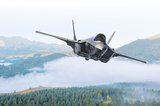
A YFQ-42A CCA aircraft takes off during flight testing this month at a California test location. (Photo: General Atomics/US Air Force)
The US Department of Defence (DoD) previously selected Anduril Industries and General Atomics to develop production-representative prototypes under the Collaborative Combat Aircraft (CCA) programme. A competitive Increment 1 production decision is expected in FY2026.


General Atomics Aeronautical Systems (GA-ASI) has announced that the first flight of a prototype YFQ-42A CCA took place on 27 August, a milestone achieved in fewer than two years from programme launch.
The aircraft was developed as a partnership between the Department of the Air Force and GA-ASI. The flights took place at a test location in California and were designed to contribute data for the continued evaluations of platform airworthiness, flight autonomy and mission system integration.
The effort, according to the department, has been “designed to support the department’s broader initiative to field large quantities of modular, affordable and operationally relevant uncrewed aircraft designed
Our news & analysis is now part of Defence Insight®
A Basic-level or higher Defence Insight subscription is now required to view this content.


More from Air Warfare
-
![V-22 Osprey safety upgrade moves towards wider fleet installation under $35.5 million deal]()
V-22 Osprey safety upgrade moves towards wider fleet installation under $35.5 million deal
Bell Boeing will supply 73 additional ODSSHI kits as NAVAIR prepares to introduce predictive drive-system monitoring across US and Japanese V-22 fleets.
-
![India’s rotary-wing capability gap grows as IMRH programme delays persist]()
India’s rotary-wing capability gap grows as IMRH programme delays persist
With IMRH and DBMRH potentially years from service, India faces a widening rotary-wing capability gap that could drive further foreign purchases even as HAL and Safran build the foundations of an indigenous successor.
-
![AFA 2026: Swarm Aero eyes 2027 Gamera flight as Textron/Merlin reveal SkyCourier UX]()
AFA 2026: Swarm Aero eyes 2027 Gamera flight as Textron/Merlin reveal SkyCourier UX
Two new uncrewed aircraft concepts target very different US military requirements, from massed long-range strike to autonomous logistics. Shephard spoke with executives from Swarm Aero, Textron Aviation and Merlin Labs at this year's AFA Air, Space & Cyber conference to learn more about their capabilities.