US awards missile and radar contracts to boost air defence
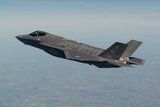
The AIM-9X Block II variant incorporates a new fuse and a forward-quarter data link capability within the radar’s field of regard. (Photo: US DoD)
New modifications to existing Department of Defense contracts cover the latest AIM-9X air-to-air missiles and active electronically scanned array radars for the F-16.


The US DoD awarded Raytheon Missiles & Defense a $113,9 million modification to a previously awarded contract on 18 November for production and delivery of additional AIM-9X missiles.
Lot 22 requirements will now include 145 AIM-9X Block II all-up round tactical missiles (104 for the US Army and 41 for the USN) and various Block II air training missiles for all US services as well as other associated equipment.
Work will be carried out in various states of the US.
The AIM-9X Block I Sidewinder is the most widely used AAM on US and allied fighter aircraft and can also
Our news & analysis is now part of Defence Insight®
A Basic-level or higher Defence Insight subscription is now required to view this content.



More from Air Warfare
-
![Sophistication versus simplification: the divided future of air-to-air missiles]()
Sophistication versus simplification: the divided future of air-to-air missiles
As global air combat operations continue to evolve at a rate not seen for decades, what will the next generation of air-to-air weapons look like, and what missions will they need to fulfil?
-
![AUSA 2026: New multiwarhead loitering munition enters increasingly competitive market]()
AUSA 2026: New multiwarhead loitering munition enters increasingly competitive market
Heaviside Industries has unveiled its new Tyr loitering munition at AUSA 2026 in Washington, DC, joining a growing field of manufacturers seeking to capitalise on billions of dollars in anticipated military spending.
-
![US military plans multi-UAV trials with Northrop Grumman quantum-navigated Lumberjack]()
US military plans multi-UAV trials with Northrop Grumman quantum-navigated Lumberjack
An undisclosed US military branch is preparing to evaluate multiple Lumberjack Group 3 drones equipped with SandboxAQ’s AQNav magnetic-navigation system. Shephard spoke with Northrop Grumman and SandboxAQ to find out more.
-
![Akinci: How Baykar turned the UAV into an African and Middle Eastern export success]()
Akinci: How Baykar turned the UAV into an African and Middle Eastern export success
From billion-dollar industrial partnerships in the Middle East to rapid military off-the-shelf deliveries in Africa, Baykar has tailored the Akinci to the needs of very different customers. Defence Insight data shows how flexibility, price and Turkish supply-chain independence have helped drive exports.