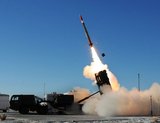
BAE Systems to deliver Common Missile Warning Systems to foreign allies
The AN/AAR-57, primarily used by rotary-wing aircraft, can also equip fixed-wing platforms. (Photo: US DoD)
BAE Systems has secured an FMS contract from the US Army for AN/AAR-57 Common Missile Warning Systems, expanding its deployment beyond the US services.


BAE Systems has received a US$114 million FMS contract from the US Army for the delivery of AN/AAR-57 Common Missile Warning Systems (CMWS).
BAE Systems has not disclosed the number of CMWS the Army intended to procure under the newly signed deal, but based on a previous FMS sale, Shephard estimated that the price of one system could be around $1.8 million. This would mean that the contract signed with BAE Systems could deliver up to 63 CMWS – probably less if accounting for inflation.
Without elaborating further, BAE Systems said that additional US allies would be able to procure the CMWS through the FMS.
“The allies will use these systems to protect existing fleets and newly acquired aircraft, including AH-64 Apache, CH-47 Chinook and UH-60 Black Hawk helicopters,” the company noted.
The CMWS provides missile warning and hostile fire detection for rotary- and fixed-wing aircraft. Its ensemble includes the Advanced Threat Infrared Countermeasure and the Common Missile Warning System.
The system employs lasers, mounted on a moveable turret, to defeat incoming infrared (IR) guided surface-to-air and air-to-air missiles. The laser was designed to blind the missile’s IR seeker and to steer the threat away from the aircraft.
Although the AN/AAR-57 has primarily been used by rotary-wing aircraft, technically, it could equip fixed-wing platforms too, provided that they feature a data bus which uses the US DoD Military Standard-1553 protocols.
Until now, the US has been the sole operator of the AN/AAR-57 CMWS with nearly 500 systems in its inventory.
Related Equipment in Defence Insight



More from Air Warfare
-
![Pentagon’s 800% PAC-3 MSE surge faces production bottleneck as Patriot demand soars]()
Pentagon’s 800% PAC-3 MSE surge faces production bottleneck as Patriot demand soars
The Pentagon wants to procure 3,203 PAC-3 MSE interceptors in FY2027, but production constraints and international demand could impact efforts to rebuild depleted missile stocks.
-
![AIM-260 JATM deal puts Australia’s missile-industrial ambitions in focus]()
AIM-260 JATM deal puts Australia’s missile-industrial ambitions in focus
While a potentially accelerated acquisition timeline could strengthen the RAAF’s long-range air combat capability, Canberra’s continued reliance on US missile production is also put under the spotlight in parallel to its push to build a sovereign industry.
-
![Attack drones versus CUAS – the future of warfare or just another trend?]()
Attack drones versus CUAS – the future of warfare or just another trend?
Demand signals for counter-drone technology are strong and the market is becoming crowded, but is this really the beginning of a new phase of warfare or will commentators be talking about something else 10 years from now?