Taiwan’s army gets a boost in battlefield reconnaissance
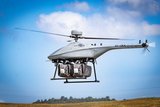
This picture shows the Tactical Short-Range Unmanned Aerial Reconnaissance Vehicle of the NCSIST in flight. (Photo: Taiwan MND)
Inspired by Ukraine, Taiwan is going all out to introduce new indigenously manufactured UAVs.


Taiwan’s National Chung-Shan Institute of Science and Technology (NCSIST) confirmed that the first 14 production rotary-winged UAVs had been handed over to a joint Republic of China Army (ROCA) combined-arms battalion.
Called the Tactical Short-Range Unmanned Aerial Reconnaissance Vehicle, the UAV will help rectify the ROCA’s decades-old weakness of battlefield reconnaissance.
The ROCA spent NT$779.989 million ($24.8 million) to purchase 50 units, comprising 100 aircraft and ground control systems. The UAV has a 30km range and 60-minute endurance.
A nose-mounted 4K colour camera provides real-time reconnaissance and surveillance for ground forces. The NCSIST will train some 110 UAV operators, and
Our news & analysis is now part of Defence Insight®
A Basic-level or higher Defence Insight subscription is now required to view this content.

More from Air Warfare
-
![V-22 Osprey safety upgrade moves towards wider fleet installation under $35.5 million deal]()
V-22 Osprey safety upgrade moves towards wider fleet installation under $35.5 million deal
Bell Boeing will supply 73 additional ODSSHI kits as NAVAIR prepares to introduce predictive drive-system monitoring across US and Japanese V-22 fleets.
-
![India’s rotary-wing capability gap grows as IMRH programme delays persist]()
India’s rotary-wing capability gap grows as IMRH programme delays persist
With IMRH and DBMRH potentially years from service, India faces a widening rotary-wing capability gap that could drive further foreign purchases even as HAL and Safran build the foundations of an indigenous successor.
-
![AFA 2026: Swarm Aero eyes 2027 Gamera flight as Textron/Merlin reveal SkyCourier UX]()
AFA 2026: Swarm Aero eyes 2027 Gamera flight as Textron/Merlin reveal SkyCourier UX
Two new uncrewed aircraft concepts target very different US military requirements, from massed long-range strike to autonomous logistics. Shephard spoke with executives from Swarm Aero, Textron Aviation and Merlin Labs at this year's AFA Air, Space & Cyber conference to learn more about their capabilities.