Taiwan gets four MQ-9B SkyGuardians
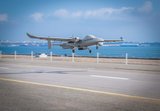
The MQ-9B is an upgraded variant of the MQ-9A designed for ISR missions. (Photo: GA-ASI)
The four new GA-ASI MQ-9B drones will join Taiwan’s UAV fleet.


General Atomics Aeronautical Systems (GA-ASI) has been awarded an up to US$250 million contract to provide four MQ-9B SkyGuardian UAVs to Taiwan.
The deal included two certifiable ground control stations, spares and support equipment. Deliveries have been scheduled for completion by mid-2027.
The MQ-9B is an upgraded variant of the MQ-9A designed for ISR missions. The UAV is split into two variants, the SkyGuardian and SeaGuardian.
The two models are mostly indistinguishable, with specific payloads outfitting the SkyGuardian for over-land operations and the SeaGuardian for maritime operations. A short takeoff and landing (STOL) kit for the platform has been under development.
Related Programmes in Defence Insight
Related Equipment in Defence Insight



More from Air Warfare
-
![FIA 2026: Bell highlights MOSA-driven growth path for MV-75 Cheyenne]()
FIA 2026: Bell highlights MOSA-driven growth path for MV-75 Cheyenne
Bell Flight’s modular open-systems approach for the US Army’s MV-75 Cheyenne could open doors for international allies and suppliers once locked out by closed rotorcraft architectures.
-
![Maximise survivability with advanced electronic warfare (video)]()
Maximise survivability with advanced electronic warfare (video)
BAE Systems’ all-digital EW delivers 360-degree threat awareness in contested environments, boosts survivability, and cuts lifecycle costs.
-
![US Air Force seeks avionics upgrades for ageing T-38 Talon as T-7A Red Hawk delays persist]()
US Air Force seeks avionics upgrades for ageing T-38 Talon as T-7A Red Hawk delays persist
The USAF is looking for commercial avionics solutions to improve the T-38 Talon’s reliability, readiness and flight safety as continued T-7A Red Hawk delays increase the likelihood that the legacy trainer will remain in service longer than planned.
-
![British Army’s Project Corvus selection highlights new era of drone sovereignty]()
British Army’s Project Corvus selection highlights new era of drone sovereignty
The UK’s choice of the Tekever AR5 for Project Corvus reflects a wider shift in military drone procurement towards solutions that centre on sovereignty and domestic production, moving away from overseas reliance.