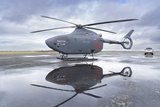
Vertical Takeoff and Landing (VTOL) UASs: Transforming Modern Warfare with Agility and Adaptability
How the Orbiter 4 VTOL UAS Delivers the Operational Capabilities and Flexibility Required to Revolutionize the Modern Battlefield.


This article is brought to you by Aeronautics
In today’s rapidly evolving defense landscape, speed and flexibility are vital. As battlefields grow increasingly complex, military forces need versatile tools to address these challenges. Recent conflicts have highlighted the renewed importance of land maneuvering, making advanced organic intelligence capabilities crucial due to the dramatic improvement in enemy air defense systems. The Orbiter 4 VTOL UAS exemplifies a synthesis of availability, agility, adaptability, intelligence capabilities, and endurance, setting a new standard in the tactical UAS landscape. This advanced technology redefines unmanned systems in high stakes environments, offering a distinct combination of maneuverability and prolonged operational capability.
Adaptability in the Field
The Orbiter 4 VTOL UAS stands out with its ability to take off and land in confined areas and rugged terrains where fixed-wing UASs falter. Its vertical takeoff and landing capabilities ensure accurate operations in unpredictable conditions, eliminating the need for extensive runways or infrastructure. Forces can deploy the Orbiter 4 VTOL kit to quickly adapt to changing terrain, launching from challenging environments with precision. This adaptability is tailored to mission requirements, with the VTOL kit easily assembled at the field level (O level).
Eyal Aasenhaym, VP Marketing & BD at Aeronautics, explained: “The Orbiter 4 VTOL allows the maneuvering force to operate even in an area with many obstacles, such as rocks, trees, and more, thus completing the mission and enabling high levels of availability.”
Multi-Mission Success and Superior Endurance
The Orbiter 4 VTOL kit allows forces to choose the best launch method depending on the mission profile. For missions demanding pinpoint accuracy, the VTOL mode offers precise takeoff and landing. For extended surveillance and reconnaissance, operators can opt for the traditional launcher and parachute/airbag system, benefiting from an impressive 24-hour endurance. This versatility makes the Orbiter 4 VTOL UAS ideal for a range of missions, including Intelligence, Surveillance, Target Acquisition, and Reconnaissance (ISTAR), search and rescue, and logistics support. The ability to switch between VTOL and traditional launcher configurations, at the field level, ensures that forces are well-equipped to handle various mission demands.
An experienced operator of the Orbiter system emphasized the practical advantages of the Orbiter 4 VTOL in tactical operations: “The Orbiter 4 VTOL UAS takes another step in reducing our logistical footprint, both by increasing operational flexibility and enabling high levels of availability. First, we got rid of the hangars and runways; now we can even put aside the launcher and clear recovery grounds for specific missions, deploying and operating from the most confined and challenging terrains. All this while enabling the flexibility for the longer endurance missions using the launcher and VTOL kit removed.”
Serviceability, Flexibility, and Multiple Payloads
As a tactical UAS, the Orbiter 4 provides flexibility with its multi-payload capabilities, supporting a wide array of sensors and equipment for simultaneous missions. Whether it’s infrared cameras, SAR or COMINT, the Orbiter 4 enhances situational awareness and data collection in all conditions - day, night, severe weather conditions, enabling large area coverage. Its modular design and low logistical footprint also ensure rapid serviceability and deployment. Small teams can quickly assemble and launch the system in a rapid turnaround time without needing complex infrastructure. Furthermore, the system’s high resilience to adverse weather conditions make it suitable for maritime and land-based missions’ joint operations. The dual payload configuration, incorporating EO/IR in addition to SAR, SIGINT, and other payloads significantly enhances the ISR capabilities, by performing the Detection to Surveillance cycle with a single AV.
Ease of Use and Reduced Logistical Footprint
The Orbiter 4 VTOL UAS streamlines operations through intuitive design and reduced logistical demands. Operators benefit from its straightforward interface and automation features, which simplify mission management and require minimal training. Its portability and runway-free operation make it quickly deployable, reducing the logistical footprint and allowing forces to deploy, turnaround and reposition swiftly.
A New Era in Battlefield Technology
By blending the agility of VTOL with the comprehensive power of the Orbiter 4 UAS, Aeronautics has developed a system that fundamentally transforms how military operations are planned and executed. Whether used for reconnaissance, logistics support, or combat missions, the Orbiter 4 VTOL UAS offers a new standard in battlefield adaptability that will shape the future of modern warfare.


More from Industry Spotlights
-
![How joint ventures are expanding Rheinmetall's munitions portfolio (video)]()
How joint ventures are expanding Rheinmetall's munitions portfolio (video)
Roman Köhne, CEO of Rheinmetall's Weapon and Ammunition Division, discusses the company's announcements at Eurosatory 2026, including developments in defence technology, precision systems, industrial partnerships and future capability programmes.
-
![From systems integrator to multi-domain solutions provider (video)]()
From systems integrator to multi-domain solutions provider (video)
Philipp von Brandenstein, Head of Corporate Communications at Rheinmetall, explains how Eurosatory 2026 marked a new stage in the company's evolution.
-
![Maximise survivability with advanced electronic warfare (video)]()
Maximise survivability with advanced electronic warfare (video)
BAE Systems’ all-digital EW delivers 360-degree threat awareness in contested environments, boosts survivability, and cuts lifecycle costs.
-
![“Timelines are measured in seconds”: tackling the UAS threat with dispersed defences]()
“Timelines are measured in seconds”: tackling the UAS threat with dispersed defences
Small uncrewed aerial systems (UAS) have transformed the battlespace, posing a complex threat across all domains. Militaries now need counter-UAS (CUAS) capabilities that defeat the danger while meeting demands around readiness, manoeuvrability and adaptability, according to Mike Spina, Director, Global Sales and Business Development for Targeting and Sensor Systems (TSS) at L3Harris Technologies.
-
![“No single technology is enough”: why an integrated approach to uncrewed warfare is essential]()
“No single technology is enough”: why an integrated approach to uncrewed warfare is essential
In Conversation… Ahmet Akyol, CEO of ASELSAN, talks to Shephard’s Gerrard Cowan about how the rapid evolution of uncrewed aerial systems (UAS) is transforming the battlespace, with militaries focused on both deploying these platforms to maximum effect and developing the defensive systems needed to counter them.
-
![Proteus: Forging the future of autonomous rotorcraft]()
Proteus: Forging the future of autonomous rotorcraft
As the home of British helicopters, Leonardo has worked with the UK Ministry of Defence for over a decade to advance technologies underpinning uncrewed rotorcraft. Today, in partnership with UK Defence Innovation and the Royal Navy, Leonardo is spearheading the next step in that journey: from remotely piloted technologies to fully autonomous systems.