


US Air Force to increase JASSM anti-interference and accuracy capabilities
The USAF is conducting market research to inform the procurement process for a new GPS/GNSS M-code receiver for the JASSM.


USN P-8A Poseidon on static display at the Seoul International Aerospace and Defense Exhibition (ADEX) in October 2019. (Photo: USN)
Boeing is providing training systems hardware to South Korea for the P-8A Poseidon maritime patrol aircraft (MPA) under a $55.4 million FMS order from the US Naval Air Warfare Center Training Systems Division.
The order comprises the production and delivery of one operational flight trainer with brief/debrief station, one weapons tactics trainer with brief/debrief station and a single virtual maintenance trainer.
Also included are electronic classrooms for maintenance training, mission systems training, flight management systems training and aircrew training.
Each classroom will have ten seats plus an instructor position.
‘Additionally, this order provides contracts, logistics, engineering and management technical expertise required for the procurement, build, inspection and acceptance of the Phase 1 hardware for the P-8A training system for the government of Korea,’ according to the DoD.
Work is expected to be completed in July 2025.
Boeing in March 2020 announced a $1.3 billion FMS contract to provide six P-8As to South Korea under the FMS programme, to replace P-3 Orion aircraft.
Deliveries are expected to begin in 2023.

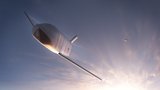
The USAF is conducting market research to inform the procurement process for a new GPS/GNSS M-code receiver for the JASSM.
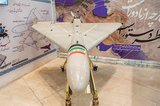
Project Nightfall and Project Octopus both fall under the Lyra programme, with UK industry working to develop and deliver additional missiles and drones to help bolster Ukraine’s warfighting capabilities against Russia.
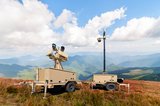
Modern C-UAS solutions must detect threats early, integrate layered sensors, and deliver fast, scalable, adaptable defense against evolving drones.
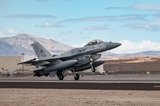
The United Arab Emirates has taken the lion’s share of this round, with the US supporting its F-16 fleet and signing off on possible sales for more AMRAAM AIM-120 missiles and a counter-drone system.
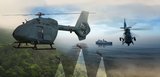
Defence industry primes are working on an array of different platforms to meet the growing need for rotary uncrewed aerial vehicles to carry out future logistics missions.
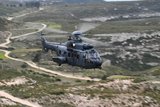
With some Eastern European countries already upgrading their helicopter fleets to incorporate Western technology, the region presents potential future opportunities for defence companies.

Connect with us on socials


