Australia axes its Reapers in surprise cancellation
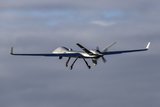
RAAF plans to buy a dozen MQ-9Bs came to grief on April Fool’s Day. (GA-ASI)
Reigniting emotions from the cancellation of its submarine programme last year, Australia has now done much the same with its planned Reaper buy from the US.


The 1st of April turned into a rather ominous day for the Australian species of the MQ-9B. Defence officials admitted at a Senate Estimates hearing that this Project Air 7003 programme was being axed.
The Royal Australian Air Force (RAAF) was expecting to receive 12 MQ-9Bs to be based at Edinburgh near Adelaide, representing the country’s first-ever armed UAVs. The US had approved the $1.65 billion sale on 23 April 2021.
Little justification has been given for the surprise cancellation. However, it is believed to be primarily budgetary in nature.
Andrew Greene, ABC’s defence correspondent, claimed the scrapping was
Already have an account? Log in
Want to keep reading this article?


More from Air Warfare
-
![Franco-German alliance aims to resolve FCAS woes by end of April as dispute rolls on]()
Franco-German alliance aims to resolve FCAS woes by end of April as dispute rolls on
The disagreement between French-German industry continues as both governments work to keep the programme alive and on track to develop and deliver a sixth-generation fighter jet.
-
![US Air Force is eyeing cost-effective automated counter-drone solutions]()
US Air Force is eyeing cost-effective automated counter-drone solutions
The USAF is seeking on-the-move systems, subsystems or technologies capable of defending airbases and fixed and semi-fixed sites against small drone attacks.
-
![Long-range drone acquisition axed as Norway announces $11.75 billion spending uplift]()
Long-range drone acquisition axed as Norway announces $11.75 billion spending uplift
Norway’s funding boost will help the country reach 3.5% of GDP on defence spending by 2035, with autonomous systems part of the long list of priorities alongside frigate acquisition and development of a new Finnmark Brigade.