Poland to send MiG-29 fighter jets to Ukraine within days
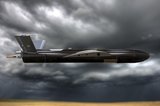
The Polish Air Force would replace the jets it gives to Kyiv with KAI-made FA-50 jets and Lockheed Martin F-35s. (Photo: Poland in NATO)
Poland has pledged to deliver four MiG-29 jets to Ukraine in full working order, becoming the first NATO member to supply fighters to Ukraine. The Polish Air Force will replace them with FA-50 and F-35 jets.


Poland will hand over four MiG-29 air superiority fighters to Ukraine in ‘full working order’, President Andrzej Duda said on 16 March during a press briefing.
He added that the rest of the country’s MiG-29s are being serviced and will be available to Ukraine in the future.
Duda said the Polish Air Force would replace the jets it gives to Kyiv with KAI-made FA-50 jets and Lockheed Martin F-35s.
‘Our security will not suffer,’ said government spokesman Piotr Muller. ‘We will keep the Russian front from our borders at all times.’
This will mark Poland as the first NATO member
Our news & analysis is now part of Defence Insight®
A Basic-level or higher Defence Insight subscription is now required to view this content.

More from Air Warfare
-
![Ageing RQ-11 Raven fleets create a global replacement opportunity]()
Ageing RQ-11 Raven fleets create a global replacement opportunity
The RQ-11 Raven is being retired from service across most of its more than 30 operators. Defence Insight estimates that these Raven retirements open up a replacement market worth at least $576 million, but suppliers will have to act quickly and strike a balance between cost and capability to succeed.
-
![Shield the warfighter, win the fight (video)]()
Shield the warfighter, win the fight (video)
BAE Systems’ Intrepid Shield™ approach delivers full-spectrum electromagnetic protection to detect, exploit, and counter advanced threats.
-
![August drone digest: AEVEX solidifies large US loitering munition market share as procurement models shift]()
August drone digest: AEVEX solidifies large US loitering munition market share as procurement models shift
AEVEX has strengthened its position in the US loitering munition market with another contract award, solidifying its position as the second-largest supplier of the capability in the US. Elsewhere in August, new and emerging programmes in Sweden and Germany point to a broader shift towards larger, rolling framework agreements for loitering munitions across Europe.
-
![US Army seeks missile costing less than $150,000 to counter Group 2 and 3 drones]()
US Army seeks missile costing less than $150,000 to counter Group 2 and 3 drones
The service wants a rapid-response, extended-range interceptor compatible with the Coyote launcher and wider US Army air-defence architecture, with initial testing scheduled for late 2026.