Partners complete Defiant X proposal for US Army
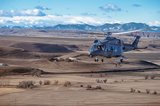
Sikorsky and Boeing claim that Defiant X offers high-speed performance while retaining traditional helicopter agility and manoeuvrability. (Photo: Sikorsky and Boeing).
The US Army has received the official proposal for Defiant X from Sikorsky and Boeing under the Future Long-Range Assault Aircraft programme.


Sikorsky and Boeing have delivered their joint Defiant X proposal ahead of schedule to the US Army as a candidate solution for the Future Long-Range Assault Aircraft (FLRAA) requirement.
In a 7 September statement, Sikorsky president Paul Lemmo and Mark Cherry, VP and HM of Vertical Lift at Boeing Defense, Space & Security, said: ‘Today, Team Defiant completed and submitted the proposal for the US Army’s FLRAA competition, offering [a] low-risk, transformational capability that delivers on an Army critical modernisation priority and advances the future of Army aviation.’
They claimed that Defiant X ‘delivers speed where it matters’ as well as survivability, ‘unsurpassed power’, manoeuvrability and other benefits for the US Army, ‘while operating in the same footprint as the Black Hawk’.
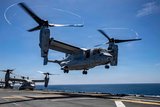
The coaxial Defiant X is competing against the Bell V-280 Valor tiltrotor for FLRAA.
Related Programmes in Defence Insight
Future Long Range Assault Aircraft (FLRAA) (MV-75 Cheyenne II) [USA]
Related Equipment in Defence Insight


More from Air Warfare
-
![How geopolitics and new military alliances are disrupting combat aircraft procurement]()
How geopolitics and new military alliances are disrupting combat aircraft procurement
Selection of fighter aircraft by national governments has always been political. As markets and allegiances shift against a background of global realignment, who will be the winners and losers as new entrants compete with established suppliers?
-
![Singapore’s interest in GCAP reflects its long-term approach to air power]()
Singapore’s interest in GCAP reflects its long-term approach to air power
A potential interest in joining GCAP is indicative of Singapore’s long-term and methodical approach to defence procurement and could benefit its local defence industry.
-
![US military tests AI-powered CUAS turret against drone swarms]()
US military tests AI-powered CUAS turret against drone swarms
As the US continues to invest heavily in counter-drone systems, demand for low-cost, mobile and autonomous technologies is on the rise, with Edda designed to align with these emerging requirements.
-
![August crewed air review: KC-390 momentum builds as demand in the tanker market grows]()
August crewed air review: KC-390 momentum builds as demand in the tanker market grows
The KC-390 is building a growing international operator base, but competition in the transport and tanker market is increasingly likely to depend on interoperability, commonality and the strength of supporting ecosystems. Meanwhile, Boeing’s KC-46 and Airbus’s A330 also gained ground in August.