Osprey flies with modified nacelle
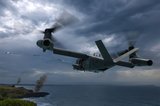
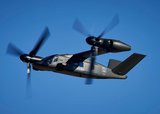
A USAF CV-22, pictured completing the first flight with incorporated nacelle improvements in December 2021. (Photo: Bell)
Nacelle modifications for the CV-22 Osprey tiltrotor are intended to cut maintenance times and enhance availability of the aircraft.


Bell has completed its first nacelle improvement modifications on a USAF CV-22 Osprey tiltrotor aircraft and the company announced on 26 January that it has begun work on a second aircraft.
Following the work at the Bell Amarillo Assembly Center, the first modified Osprey returned to the 20th Special Operations Squadron at Cannon AFB on 13 December 2021.
V-22 nacelles house critical power components for the aircraft’s vertical take-off and landing capabilities and transition to forward flight.
About 60% of maintenance man-hours on the CV-22 are spent on the nacelles. Bell stated that the ongoing modification programme benefits V-22 fleet maintainers and operators ‘by reducing maintenance time and costs while simultaneously enhancing flying readiness rates’.
US Naval Air Systems Command (NAVAIR) awarded Bell Boeing an $81 million contract in December 2020 to complete nacelle improvements on the CV-22 fleet. The contract covers the completion of non-recurring elements, fabrication of nine kits, and installation of one kit.
Work on the contract could continue beyond 2025 if NAVAIR exercises options for fabrication and installation.
Related Equipment in Defence Insight

You may also like
More from Air Warfare
-
![The 2020s: a decade of UAV spending growth]()
The 2020s: a decade of UAV spending growth
Total annual drone spending has increased nearly sixfold since the start of the decade, from $2.9 billion in 2020 to $16.3 billion in 2028, with Europe leading the rise.
-
![USAF opens B-52 upgrade to new companies as major programmes fall behind schedule]()
USAF opens B-52 upgrade to new companies as major programmes fall behind schedule
The US Air Force is seeking additional contractors to support communications upgrades for the B-52, while multiple Stratofortress modernisation programmes continue to experience delays, cost growth and technical challenges.
-
![July drone digest: Sovereign production takes centre stage at Farnborough]()
July drone digest: Sovereign production takes centre stage at Farnborough
Farnborough International Airshow (FIA) 2026 revealed the growing scale of the UK’s uncrewed ambitions, with companies showcasing new CCA, autonomous wingmen and surveillance drones, while sovereign production emerged as a key factor for multiple programmes.
-
![July air forces review: Farnborough steals the headlines as programmes develop]()
July air forces review: Farnborough steals the headlines as programmes develop
The biannual Farnborough International Airshow 2026 was the backdrop in July for scores of deals, partnerships and announcements, including developments in the multinational next-generation Global Combat Air Programme and the UK’s $486 million trainer aircraft requirement.
-
![FIA 2026: Bell highlights MOSA-driven growth path for MV-75 Cheyenne]()
FIA 2026: Bell highlights MOSA-driven growth path for MV-75 Cheyenne
Bell Flight’s modular open-systems approach for the US Army’s MV-75 Cheyenne could open doors for international allies and suppliers once locked out by closed rotorcraft architectures.
-
![Maximise survivability with advanced electronic warfare (video)]()
Maximise survivability with advanced electronic warfare (video)
BAE Systems’ all-digital EW delivers 360-degree threat awareness in contested environments, boosts survivability, and cuts lifecycle costs.