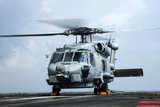
Only 25% of the US Pentagon’s F-35 fleet has been fully mission capable, GAO says
Sailors spin up an F-35C for maintenance operations on the flight deck of USS George Washington. (Photo: US Navy)
The fighter jet remains a combat necessity, but sustainment challenges continue to limit its readiness. In the meantime, the US Air Force seeks billions in funding to improve the F-35’s availability.


The availability rates of the F-35 Lightning II have been a headache for the US Pentagon. In a report issued last week, the Government Accountability Office (GAO) alerted that, from FY2021 to FY2025, the full mission capable level, which is the percentage of time the jet can perform all of its missions, declined from 38% to 25%.
The mission capable rate (percentage of time the aircraft can perform one of its tasked missions) also recorded a reduction during this time period from 67% to 44%. It means that nearly half of the US Department of Defense (DoD) fleet was not capable
Our news & analysis is now part of Defence Insight®
A Basic-level or higher Defence Insight subscription is now required to view this content.


More from Air Warfare
-
![Europe risks losing control of CUAS production capacity as manufacturers look abroad]()
Europe risks losing control of CUAS production capacity as manufacturers look abroad
European counter-drone developers are securing early orders in the Middle East while slow domestic acquisition processes threaten to redirect production capacity, expertise and investment away from Europe.
-
![India’s rotary-wing capability gap grows as IMRH programme delays persist]()
India’s rotary-wing capability gap grows as IMRH programme delays persist
With IMRH and DBMRH potentially years from service, India faces a widening rotary-wing capability gap that could drive further foreign purchases even as HAL and Safran build the foundations of an indigenous successor.
-
![AFA 2026: Swarm Aero eyes 2027 Gamera flight as Textron/Merlin reveal SkyCourier UX]()
AFA 2026: Swarm Aero eyes 2027 Gamera flight as Textron/Merlin reveal SkyCourier UX
Two new uncrewed aircraft concepts target very different US military requirements, from massed long-range strike to autonomous logistics. Shephard spoke with executives from Swarm Aero, Textron Aviation and Merlin Labs at this year's AFA Air, Space and Cyber conference to learn more about their capabilities.
-
![Could the next UAS market boom take place beyond the battlefield?]()
Could the next UAS market boom take place beyond the battlefield?
While the headlines remain dominated by the use of drones for combat operations in Ukraine and other conflicts, there are emerging use cases where the technology could usefully feed back into areas and missions outside the war zone.