Nordic nations plan to jointly operate air forces
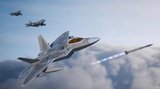
The goal of the cooperation is to allow seamless joint operation. (Photo: Finnish Air Force)
Four Scandinavian countries have signed a joint declaration to strengthen the air defence of the region in the face of a heightened Russian threat.


Denmark, Finland, Norway and Sweden have signed a declaration of intent to ‘deepen [their] already established cooperation’, the Finnish and Danish air forces said.
The declaration is the first of its kind and commander of the NATO Air Force Staff, Gen James B Hecker, was also present at the event.
‘The declaration of intent strengthens cooperation between the countries and creates the conditions for strengthening the air defence of the Nordic countries,’ the Finnish Air Force noted in a statement published on 23 March.
A Danish press release, published on 24 March, said the Nordic countries will pursue four areas
Our news & analysis is now part of Defence Insight®
A Basic-level or higher Defence Insight subscription is now required to view this content.



More from Air Warfare
-
![Sophistication versus simplification: the divided future of air-to-air missiles]()
Sophistication versus simplification: the divided future of air-to-air missiles
As global air combat operations continue to evolve at a rate not seen for decades, what will the next generation of air-to-air weapons look like, and what missions will they need to fulfil?
-
![AUSA 2026: New multiwarhead loitering munition enters increasingly competitive market]()
AUSA 2026: New multiwarhead loitering munition enters increasingly competitive market
Heaviside Industries has unveiled its new Tyr loitering munition at AUSA 2026 in Washington, DC, joining a growing field of manufacturers seeking to capitalise on billions of dollars in anticipated military spending.
-
![US military plans multi-UAV trials with Northrop Grumman quantum-navigated Lumberjack]()
US military plans multi-UAV trials with Northrop Grumman quantum-navigated Lumberjack
An undisclosed US military branch is preparing to evaluate multiple Lumberjack Group 3 drones equipped with SandboxAQ’s AQNav magnetic-navigation system. Shephard spoke with Northrop Grumman and SandboxAQ to find out more.
-
![Akinci: How Baykar turned the UAV into an African and Middle Eastern export success]()
Akinci: How Baykar turned the UAV into an African and Middle Eastern export success
From billion-dollar industrial partnerships in the Middle East to rapid military off-the-shelf deliveries in Africa, Baykar has tailored the Akinci to the needs of very different customers. Defence Insight data shows how flexibility, price and Turkish supply-chain independence have helped drive exports.