Nigerian Army begins Aerosonde operations
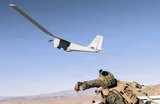
Aerosonde is equipped with ISR capabilities and will serve as the first UAS of its kind to be used in Nigeria. (Photo: Textron)
The Nigerian Aerosonde UAS supplied by Textron will enhance the West African country’s security and ISR mission capabilities.


Textron has begun operational flights of its Aerosonde UAS for the Nigerian Army, the company announced on 11 October.
Aerosonde is equipped with ISR capabilities and will serve as the first UAS of its kind to be used in the West African country.
The UAS is designed for expeditionary land- and sea-based operations and can deliver simultaneous day/night full-motion video, wide area surveillance and voice communication relay.
Nigeria has received a number of Aerosonde Mk 4.7 fixed-wing UAS to enhance its domestic security and ISR mission capabilities.
The contract is worth $25.6 million and was awarded to Textron by the US DoD in 2020 to deliver the UAS to Nigeria. It was funded under the US overseas contingency and peacekeeping operations budget.
It includes contractor logistic support services that involve ongoing sustainment, logistic service, parts and repairs support, technical publication updates and continuous asset support for the duration of the contract.

More from Air Warfare
-
![July drone digest: Sovereign production takes centre stage at Farnborough]()
July drone digest: Sovereign production takes centre stage at Farnborough
Farnborough International Airshow (FIA) 2026 revealed the growing scale of the UK’s uncrewed ambitions, with companies showcasing new CCA, autonomous wingmen and surveillance drones, while sovereign production emerged as a key factor for multiple programmes.
-
![July air forces review: Farnborough steals the headlines as programmes develop]()
July air forces review: Farnborough steals the headlines as programmes develop
The biannual Farnborough International Airshow 2026 was the backdrop in July for scores of deals, partnerships and announcements, including developments in the multinational next-generation Global Combat Air Programme and the UK’s $486 million trainer aircraft requirement.
-
![FIA 2026: Bell highlights MOSA-driven growth path for MV-75 Cheyenne]()
FIA 2026: Bell highlights MOSA-driven growth path for MV-75 Cheyenne
Bell Flight’s modular open-systems approach for the US Army’s MV-75 Cheyenne could open doors for international allies and suppliers once locked out by closed rotorcraft architectures.
-
![Maximise survivability with advanced electronic warfare (video)]()
Maximise survivability with advanced electronic warfare (video)
BAE Systems’ all-digital EW delivers 360-degree threat awareness in contested environments, boosts survivability, and cuts lifecycle costs.