New HAL helicopter facility to speed up LUH production
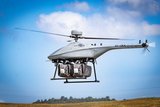
An LUH from HAL conducts high-altitude testing in Ladakh. (Photo: HAL)
The Indian military continues to wait for new light helicopters, though a new HAL production facility will begin to solve the capability gap.


The launch of a Hindustan Aeronautics Limited (HAL) 615-acre facility in Tumakaru, 70km from present facilities in Bangalore, will plug a capacity gap for the considerably delayed Light Utility Helicopter (LUH).
Prime Minister Narendra Modi inaugurated the new helicopter factory on 6 February, with a total requirement of around 400 LUHs for the army and air force.
The Tumakuru factory will be a ‘one-stop solution for all helicopter requirements,’ according to an MoD statement.
A helipad, final assembly and structural assembly hangars, air traffic control and flight facilities will all exist, even though HAL is yet to receive an order
Our news & analysis is now part of Defence Insight®
A Basic-level or higher Defence Insight subscription is now required to view this content.




More from Air Warfare
-
![AFA 2026: USAF examines uncrewed cargo aircraft for contested logistics]()
AFA 2026: USAF examines uncrewed cargo aircraft for contested logistics
The US Air Force is evaluating demonstrators for uncrewed cargo missions as it considers logistics requirements across the Pacific and other contested environments.
-
![Germany air focus: Europe’s leading near-term air market targets domestic industry]()
Germany air focus: Europe’s leading near-term air market targets domestic industry
Between 2026 and 2032, almost a quarter of EU aircraft spending is expected to come from Germany. While crewed programmes seek modernisation and replacement, uncrewed opportunities look to introduce entirely new capabilities, with both highlighting sovereignty and domestic production.
-
![Europe risks losing control of CUAS production capacity as manufacturers look abroad]()
Europe risks losing control of CUAS production capacity as manufacturers look abroad
European counter-drone developers are securing early orders in the Middle East while slow domestic acquisition processes threaten to redirect production capacity, expertise and investment away from Europe.
-
![AFA 2026: Swarm Aero eyes 2027 Gamera flight as Textron/Merlin reveal SkyCourier UX]()
AFA 2026: Swarm Aero eyes 2027 Gamera flight as Textron/Merlin reveal SkyCourier UX
Two new uncrewed aircraft concepts target very different US military requirements, from massed long-range strike to autonomous logistics. Shephard spoke with executives from Swarm Aero, Textron Aviation and Merlin Labs at this year's AFA Air, Space & Cyber conference to learn more about their capabilities.
-
![US Navy moves EA-18G Growler Block II electronic-attack upgrade into full-rate production]()
US Navy moves EA-18G Growler Block II electronic-attack upgrade into full-rate production
A US$184.25 million contract for Next Generation Electronic Attack Units advances the Growler’s modernisation as the US Navy confronts ageing systems, parts shortages and obsolescence.