MQ-4C Triton makes maiden IFC-4 test flight
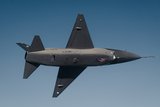
The upgraded MQ-4C Triton UAV ICF-4 takes flight (Photo: Northrop Grumman)
Northrop Grumman meets 'hugely important milestone' for USN MQ-4C Triton programme.


Northrop Grumman has announced that the company's MQ-4C Triton HALE UAV has taken flight for the first time in test conditions using a multi-intelligence configuration dubbed Integrated Functional Capability Four (IFC-4).
Despite the announcement not making any mention of what was achieved during the flight, Northrop referred to it as a 'hugely important milestone'.
The multi-intelligence Triton features a 360-degree AESA maritime radar, full-motion EO/IR video streaming and full-spectrum HALE signals intelligence capabilities with the USN expected to declare IOC for the upgraded aircraft in 2023.
Additionally, Northrop Grumman notes that the multi-intelligence configuration will enable the USN to retire the EP-3E Aries as Triton assumes responsibility for intelligence collection missions.
The USN is expected to maintain five 24/7 operational orbits using Triton and has committed to a 68-aircraft programme of record.
FY2022 budget documents show that the US DoD has requested a one-year production gap for Triton in FY2022, with recommencement in FY2023.
Related Programmes in Defence Insight
MQ-4 Triton (Announced/Contracted) [USA]
Related Equipment in Defence Insight


More from Air Warfare
-
![Anduril marks new milestones with YFQ-44A flight tests as USAF plans further demos]()
Anduril marks new milestones with YFQ-44A flight tests as USAF plans further demos
A production decision on Increment 1 of the CCA Programme is due to be made by the end of the year, with further demonstrations building on F-22 Raptor and MQ-20 Avenger teaming flight tests.
-
![First confirmed US one‑way drone strike on Iran sharpens Pentagon UAV expansion]()
First confirmed US one‑way drone strike on Iran sharpens Pentagon UAV expansion
The US is currently escalating its efforts to acquire more than 300,000 low-cost one-way attack drones, with the confirmed use of these platforms against Iran in recent days emphasising their growing use in combat.
-
![UK MoD awards Leonardo with £1 billion New Medium Helicopter contract]()
UK MoD awards Leonardo with £1 billion New Medium Helicopter contract
The £1 billion contract has secured jobs at Leonardo’s Yeovil site and will provide the British forces with 23 new medium-lift helicopters.
-
![NSPA outlines next steps for NATO’s Next-Generation Rotorcraft Capability effort]()
NSPA outlines next steps for NATO’s Next-Generation Rotorcraft Capability effort
The NATO agency gave further updates on the next stages of its rotorcraft programme and timelines for the next three years, with the initiative aimed at replacing ageing medium-lift helicopters in various NATO countries.
-
![UK’s New Medium Helicopter deal finalisation on horizon, alludes Leonardo CEO]()
UK’s New Medium Helicopter deal finalisation on horizon, alludes Leonardo CEO
A potential announcement within days could end speculation around the UK Ministry of Defence’s procurement direction for the NMH programme.