Lockheed takes US JAGM and Hellfire follow-on production order
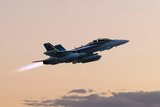
More than 30 FMS customers operate the Hellfire missile. (Photo: US DoD)
The total contract award value for Hellfire and JAGM missiles for the US services was set out for up to $4.5 billion between 2023 and 2025.


Lockheed Martin has been awarded a US$483 million follow-on production contract by the US Army for Joint-Air-to-Ground Missiles (JAGM) and Hellfire missiles.
Under the contract, Lockheed will provide JAGM and Hellfire procurement and support for the US Army, the US Navy and international customers. The latest contract was the third follow-on deal that was part of a multiple-year award, initially signed in March 2023. The total contract award value was set out for up to $4.5 billion through 2025.
Currently, more than 30 FMS customers operate Hellfire, with Hellfire II having been the principal air-to-ground weapon for the US Army AH-64 Apache, OH-58 Kiowa Warrior and MQ-1C Gray Eagle UAS.
The JAGM dual-mode guidance section can offer JAGM performance at a cost comparable to Hellfire.
Related Equipment in Defence Insight

More from Air Warfare
-
![Canada targets 2028 operational debut for AIM-9X and AIM-120D missiles]()
Canada targets 2028 operational debut for AIM-9X and AIM-120D missiles
The missile programmes form part of a broader effort to strengthen Canadian air-combat readiness as the RCAF transitions from the CF-188 to the F-35A and rebuilds its operational weapons stocks.
-
![AIM-260 JATM deal puts Australia’s missile-industrial ambitions in focus]()
AIM-260 JATM deal puts Australia’s missile-industrial ambitions in focus
While a potentially accelerated acquisition timeline could strengthen the RAAF’s long-range air combat capability, Canberra’s continued reliance on US missile production is also put under the spotlight in parallel to its push to build a sovereign industry.
-
![Attack drones versus CUAS – the future of warfare or just another trend?]()
Attack drones versus CUAS – the future of warfare or just another trend?
Demand signals for counter-drone technology are strong and the market is becoming crowded, but is this really the beginning of a new phase of warfare or will commentators be talking about something else 10 years from now?