Kazakhstan to begin assembly of Turkish Anka drones in 2024
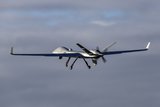
TAI had first promoted its products to Kazakstan in 2018. (Photo: TAI)
The partnership between Kazakhstani and Turkish manufacturers will attempt to open production, and facilitate knowledge and technology transfer, enabling Kazakhstan to independently manufacture UAVs in the future.


The assembly of the Turkish-designed Anka medium-altitude long-endurance (MALE) UAV has been scheduled to begin in Kazakhstan in 2024, approximately two years after Turkish Aerospace Industries (TAI) and Kazakhstan Engineering signed an MoU.
Speaking to Kazakhstani media outlet Inbusiness, TAI’s UAV programme development manager Erol Oğuz said the amount of investment was being worked out and emphasised the importance of knowledge sharing between the partners.
‘We set a goal not just to open production, but to transfer experience and technology so that in the future, Kazakhstan can independently produce unmanned aerial vehicles,’ Oğuz was quoted as saying.
TAI had first promoted
Our news & analysis is now part of Defence Insight®
A Basic-level or higher Defence Insight subscription is now required to view this content.

More from Air Warfare
-
![India’s military integration drive faces interoperability hurdles]()
India’s military integration drive faces interoperability hurdles
Senior military leaders have highlighted the need for interoperable systems, common data standards and closer cooperation between India's armed services.
-
![UK A400M Saudi deployment highlights airlifter’s role as Airbus pursues upgrades]()
UK A400M Saudi deployment highlights airlifter’s role as Airbus pursues upgrades
Airbus is developing new capabilities for its A400M transport aircraft as European countries consider future airlift requirements and the UK plans to deploy the aircraft to Saudi Arabia.
-
![The new generation of defence companies emerging from the US UAV boom]()
The new generation of defence companies emerging from the US UAV boom
As the Pentagon accelerates procurement of low-cost, lethal UAVs through its Drone Dominance Program, emerging suppliers will need to demonstrate manufacturing capacity, supply chain resilience and reliability.