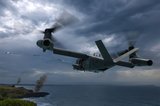
Iran turns to Russia to modernise fighter jet fleet
The Su-35 has a simultaneous tracking capability of up to 30 for aerial targets and four for ground targets. (Photo: Wikimedia Commons)
As Iranian drones equip Russian forces in ever-increasing numbers, Su-35 fighter jets will soon be heading in the opposite direction as Tehran urgently seeks modern air combat capabilities.


The latest reports of Iran receiving 24 Russian Sukhoi Su-35 fighter jets emerged through Western intelligence sources at the end of last year.
Shahriar Heidari, a member of the Iranian Parliament’s National Security and Foreign Policy Commission, confirmed this in the middle of January in an interview with Iranian media.
The Islamic Republic of Iran Air Force’s (IRIAF) is in dire need of modern air capabilities as it still largely relies on US-built fighter jets procured before the 1979 revolution.
In 2015, reports said the IRIAF wanted to procure Su-30s, but Tehran’s priorities were focused elsewhere at the time.
Our news & analysis is now part of Defence Insight®
A Basic-level or higher Defence Insight subscription is now required to view this content.

More from Air Warfare
-
![July drone digest: Sovereign production takes centre stage at Farnborough]()
July drone digest: Sovereign production takes centre stage at Farnborough
Farnborough International Airshow (FIA) 2026 revealed the growing scale of the UK’s uncrewed ambitions, with companies showcasing new CCA, autonomous wingmen and surveillance drones, while sovereign production emerged as a key factor for multiple programmes.
-
![July air forces review: Farnborough steals the headlines as programmes develop]()
July air forces review: Farnborough steals the headlines as programmes develop
The biannual Farnborough International Airshow 2026 was the backdrop in July for scores of deals, partnerships and announcements, including developments in the multinational next-generation Global Combat Air Programme and the UK’s $486 million trainer aircraft requirement.
-
![FIA 2026: Bell highlights MOSA-driven growth path for MV-75 Cheyenne]()
FIA 2026: Bell highlights MOSA-driven growth path for MV-75 Cheyenne
Bell Flight’s modular open-systems approach for the US Army’s MV-75 Cheyenne could open doors for international allies and suppliers once locked out by closed rotorcraft architectures.
-
![Maximise survivability with advanced electronic warfare (video)]()
Maximise survivability with advanced electronic warfare (video)
BAE Systems’ all-digital EW delivers 360-degree threat awareness in contested environments, boosts survivability, and cuts lifecycle costs.